From the Rooftop to the Beach
The geography of the Cannes Lions festival is, like all geography, a statement of priorities. For the past two years, LIONS Creators — the festival’s dedicated program for social media creators, influencers, and the brands that work with them — was located on the rooftop of the Palais des Festivals. The location was significant, visible, and out of the way. The 2026 edition has moved it to the beach.
The beach at Cannes Lions is where the money is. Meta, Google, Spotify, Pinterest, and Snapchat have built their primary activation spaces there — outdoor restaurants transformed into branded environments where celebrities drop in, deals are made, and the creative industry’s most important conversations happen between sessions. Moving LIONS Creators to that beach signals something about what the festival’s organizers believe has changed in the marketing landscape. “Creators and creator marketing are just an absolute core component of creative marketing now,” Ed Davidson, chief growth officer of LIONS, told Scalable. “It’s necessary as more creators have started coming to the festival.”
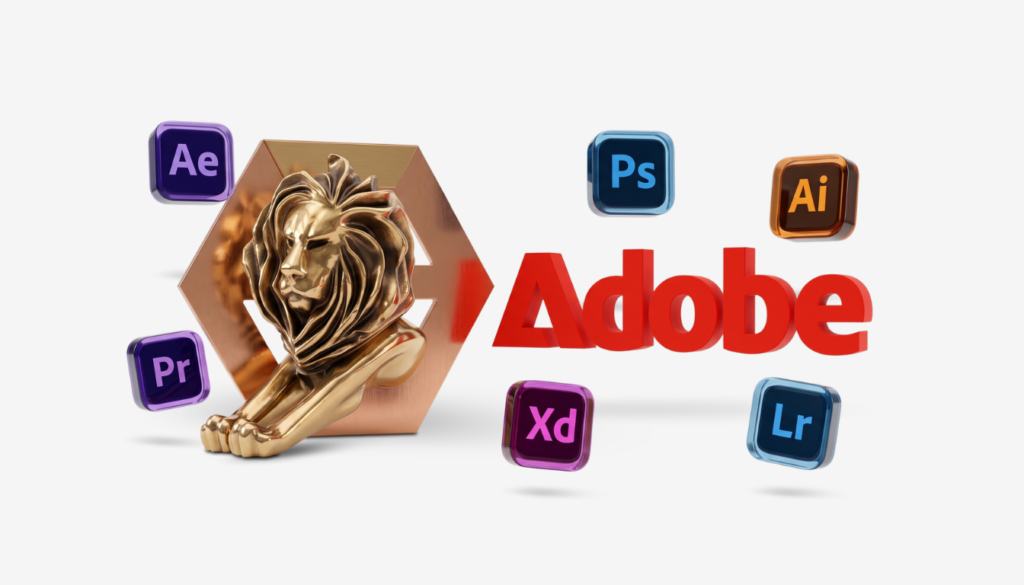
Adobe is not just present on that beach. It is the headline partner — the first brand to hold that title in the LIONS Creators program’s history. The commitment includes the LIONS Creators Beach, where creators, CMOs, and agency executives will have access to a podcast studio, an editing suite stocked with Adobe products including Firefly, and a program of talks that spans monetization strategy, brand partnerships, and the creative process itself. Featured sessions include a conversation with Diary of a CEO host Steven Bartlett, a Group Chat series featuring prominent creators, and panels drawing from Adobe’s relationships with both enterprise brands and individual creative professionals.
What Adobe Is Actually Selling
The Cannes presence is the public expression of a strategic pivot that Adobe has been executing for the past 18 months and that its Q2 2026 earnings made commercially visible. Adobe is no longer primarily a software company selling Creative Cloud subscriptions to professional designers and video editors. It is building what its leadership describes as a “creative platform where the best models can work together” — an AI-native infrastructure layer that serves everyone from individual creators with 50,000 followers to the largest enterprise marketing organizations worldwide.
The product architecture reflects that ambition. Firefly AI Assistant, launched in April 2026, enables creators to orchestrate complex multi-step workflows across Photoshop, Premiere, Lightroom, Illustrator, and Adobe Express using natural language — describing the outcome they want and letting the assistant execute across the application stack. Adobe GenStudio for Performance Marketing allows enterprise marketing teams to generate on-brand campaign content for paid social, display, email, and video at the speed that modern content velocity demands. Firefly Custom Models allows brands to fine-tune Adobe’s generative AI on their own brand assets, producing output that is consistent with established visual identity without requiring a designer to review every asset. The Adobe Creative Agent is available inside Claude, ChatGPT, and, soon, Copilot and Gemini — taking Adobe’s creative infrastructure into the AI assistant environments where a growing portion of professional work is initiated.
The Cannes presence connects those product capabilities to the specific audience that generates their commercial demand. Creators use Photoshop, Premiere, Lightroom, Illustrator, and Express, and Many of them have built careers on Adobe’s tools before the AI layer existed. The question Adobe is asking them to answer at Cannes is whether Firefly and the creative agent infrastructure that surrounds it makes their work faster, more distinctive, and more commercially viable. The beachfront editing suite and podcast studio are, in that sense, both a hospitality activation and a product demonstration at scale.
The Creator Economy Is Where Adobe Grows Next
The strategic case for Adobe’s Cannes investment rests on a set of numbers that make the creator economy one of the most commercially significant growth opportunities in the software market. The creator economy is forecast by Goldman Sachs to reach approximately $480 billion by 2027. Social media creator revenue will increase 16.2% in 2026 to $20.6 billion. In addition, creator marketing budgets at enterprise brands have risen 171% year-over-year. The people generating that economic activity — the 50 million-plus professional and semi-professional creators producing content across YouTube, TikTok, Instagram, and podcast platforms — are exactly the users Adobe has historically served with its professional creative tools.
What the AI era has changed is the competitive dynamics of that relationship. Canva has moved aggressively into Adobe’s traditional territory with AI-powered design tools accessible to non-professionals. CapCut has taken significant share in mobile video editing, particularly among younger creators. New generative AI-native creative tools from startups including Runway, Pika, and ElevenLabs have created alternative workflows in video, audio, and image generation that didn’t exist 24 months ago. Adobe’s response has not been to defend its traditional user base but to extend upward and outward simultaneously: into enterprise marketing orchestration through GenStudio, into AI-native workflows through Firefly and the creative agent, and into the creator economy through partnerships that establish its tools as the professional infrastructure of creator work rather than the entry-level option.
The inaugural UTA Beach at Cannes — which will bring 70 creators to the festival from the United Artists Talent agency — is a signal that the creator economy’s most important gatekeepers are now present at the event where the advertising industry’s most significant relationships are built. Adobe has recognized that, and invested accordingly. The beach is where the deals get made. Adobe is on the beach.