
Two Retailers, Two Economies
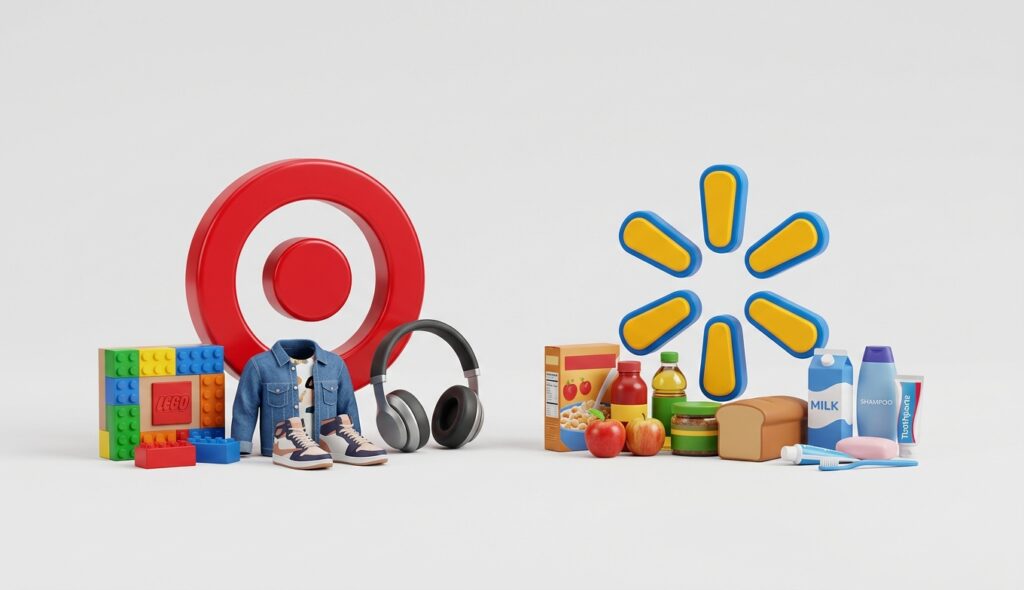
Target and Walmart reported the same quarter and told opposite stories. Target’s sales rose 5.3% to $26.54 billion, with double-digit growth in the discretionary categories it calls Fun 101, pop culture, toys, consumer electronics, gaming, books and sports gear, and high-single-digit gains in food, beverage and beauty. Walmart’s U.S. comparable sales rose just 2.6%, its weakest showing since the pandemic recession of 2020, and its executives spoke mostly about new ways to lower prices for strained shoppers, pointing to $2.9 billion in expected tariff refunds it plans to pass through as savings. One retailer is selling delight, the other is defending value, and the split is a clean portrait of a K-shaped economy in which the two halves of the consumer base are living in different realities.
The Comeback Thesis
Target’s results are the clearest evidence yet that new chief executive Michael Fiddelke’s turnaround is taking hold. Fiddelke, a Target lifer who took over in February, is pouring an incremental $1 billion into store updates, payroll and training, and merchandising curation, organized around four priorities: merchandising authority, guest experience, technology, and team and communities. It was the third straight strong quarter, and Bloomberg went so far as to ask whether Target is starting to look like Tarzhay again, the affectionate nickname it earned when unexpected style sat beside everyday value. The thesis is to restore the cheap-chic magic the chain had misplaced, competing on desire rather than price alone.
Collaborations as the Engine
The growth is being powered by curated newness. Target leaned on a limited LoveShackFancy collection of teen and tween clothing, school supplies and accessories, and a dorm-decor collaboration with Hollister, exactly the trend-right partnerships that once defined it. The specifics tell the story: style-forward $10 headphones jumped 35%, Lego sales rose 30% and plush toys climbed 20%. This is discretionary spending, the nice-to-have merchandise that had stopped landing consistently, returning as shoppers with room in their budgets choose Target for things they want rather than only things they need. The assortment, in effect, is doing the work of marketing.
The Real Profit Machine
Beneath the merchandising story sits a less visible engine of growth. Target’s retail-media business grew nearly 20% to $279 million, while marketplace gross merchandise volume and membership revenue each rose more than 40%. Those are high-margin, advertising-adjacent revenues that increasingly fund the price investments and store upgrades a turnaround requires. Walmart is running the same play at larger scale, with its global and U.S. advertising businesses up 38%, which underscores a shared truth of modern retail. The shelf sells the goods, but the ad network and the membership base are where the profit compounds.
What the Divergence Teaches
The lesson in the split is strategic. In a K-shaped economy, the retailer that markets desire captures the half still willing to spend, while the one that markets only value fights over the half being squeezed. Target is staking its recovery on newness and delight, Walmart on relentless affordability, and both are financing the contest with booming ad businesses. The caution is that Target’s rebound is, in Morningstar’s words, execution-dependent, and trend merchandise is fickle heading into a make-or-break holiday season. For marketers, the takeaway is that merchandising is a message. What a store chooses to put on its shelves, and how it frames it, is now as much a brand statement as any campaign.