

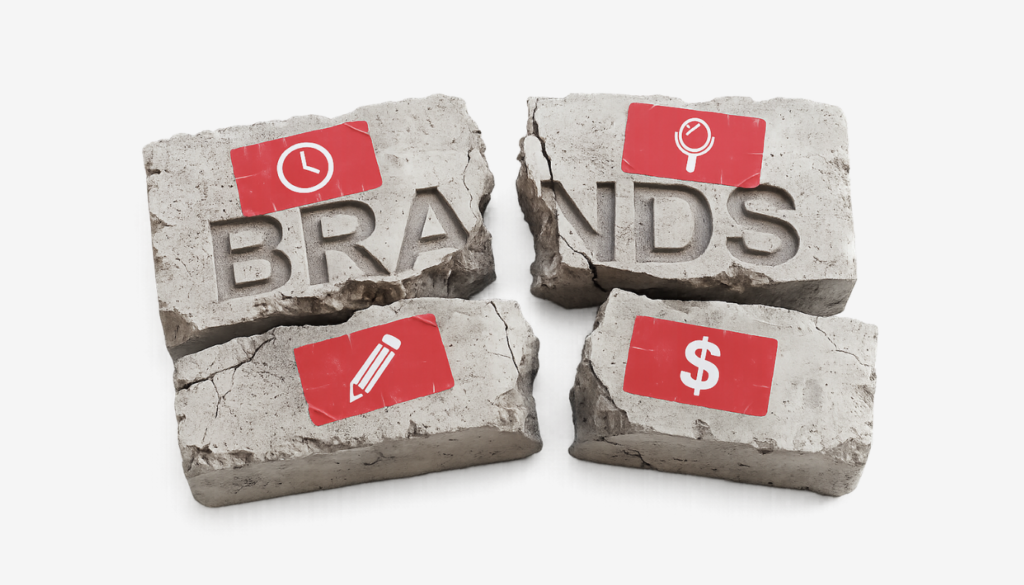
When a Slogan Is Never Just a Slogan
The most dangerous marketing decisions rarely look dangerous. In a story recounted by brand strategists François Bazini, Michel Sara, and Manuel Montes, a new head of marketing presented a chief executive with fresh slogans for several of the company’s brands. The CEO waved it off as a tactical call, too small to fight over amid factory strikes, retailer pressure, and a budget gap. His reaction was understandable, and it captured a core paradox of modern marketing. Executives scrutinize capital spending, acquisitions, and structural change because they know those choices shape the future, yet they routinely let decisions that reshape a brand’s positioning, audience, personality, or distinctive assets pass as minor. Like the most dangerous diseases, these choices thrive because they slip past the organization’s immune system, and by the time anyone notices, the damage is already underway. Bad strategy tends to arrive disguised as good marketing.
Impatience Disguised as Agility
Companies and their customers experience time differently. A campaign that feels stale to the team that has lived with it for months may be the very thing a consumer is only beginning to associate with the brand. The greatest returns from a distinctive asset arrive late, yet organizations often interrupt the process just as those returns start to compound, simply because insiders have grown tired of their own work. What looks like a harmless creative refresh can dismantle a real competitive advantage. As Byron Sharp and System1 have both shown, distinctive assets become more valuable through repeated use, not less, which means abandoning them early destroys value that was about to pay off.
Personal Legacy Disguised as Consumer-Centricity
Every new marketing leader wants to improve what they inherit. Trouble begins when improvement blurs into the urge to leave a personal mark. One leader tweaks the brand’s image, the next repositions it toward a younger crowd, another hands it a new personality. Careers advance through visible change, but brands accumulate value through consistency, and these incremental shifts can leave consumers unsure what the brand even stands for. Listening to customers is essential, but overzealous customer-centricity can be used to justify a decision rather than test it. Once an organization has decided change is needed, it often deploys research to rationalize the move instead of challenging it. A more interesting identity is not the same thing as a more valuable one.
Creative Excitement Disguised as Effectiveness
Marketing is drawn to visible work. New campaigns, redesigns, and limited editions generate energy because they are enjoyable to make and easy to celebrate. Some of the largest growth opportunities are far less glamorous: improving pack-price architecture, simplifying an overgrown portfolio, strengthening core products, expanding availability, and sharpening promotional efficiency. These levers rarely excite a room, yet they often deliver greater commercial impact, and they demand relatively little non-working investment, meaning more of the budget reaches consumers instead of being consumed by the process of making the work. Like any profession, marketing gravitates toward the tasks it enjoys. The highest-return work is not always the most fun.
Short-Sightedness Disguised as Financial Discipline
Few ideas sound more responsible than financial discipline, and every marketer should be able to show the commercial impact of investment. The trap is equating discipline with immediate measurability. Price promotions, retail activation, and lower-funnel media produce fast, legible results. Brand building is different because it is an investment in future demand, creating the memory structures that make people prefer a product and accept a higher price, benefits that take years to mature. Danger arrives one planning cycle at a time: a little more toward what is easy to measure, a little less toward what creates tomorrow’s demand. The dashboards look reassuring while growth quietly gets harder. Nike’s recent rebalancing toward brand building is a reminder that maximizing short-term efficiency and maximizing long-term brand value are not the same goal. The damage compounds, and by the time it is recognized, years of sensible-looking decisions have blurred the brand beyond recognition.