
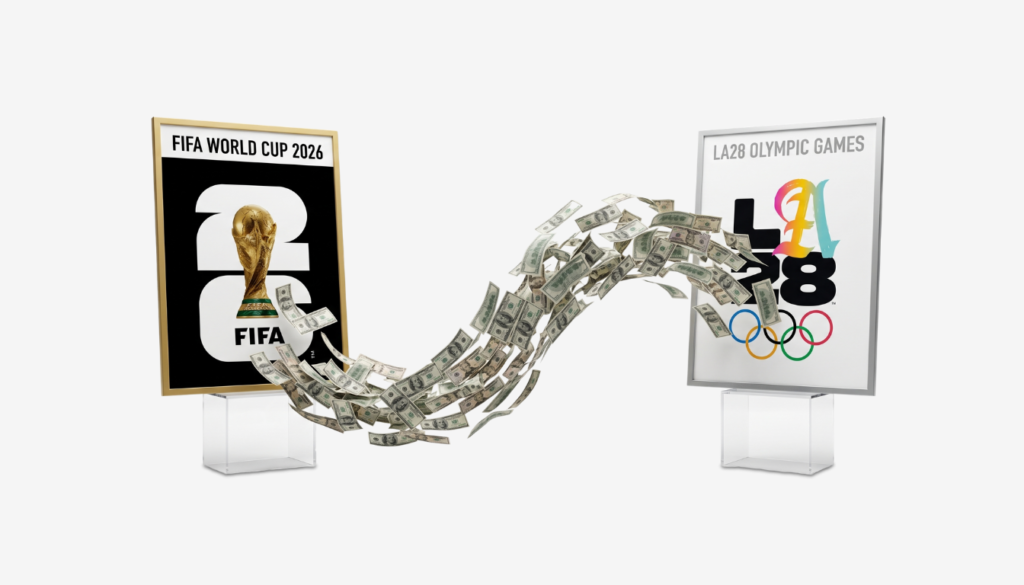
The Tournament That Reset the Price of Attention
The 2026 World Cup closed with figures that will shape sports marketing budgets for the rest of the decade. FIFA finished the tournament with roughly $15 billion in revenue, more than 70 percent above the previous cycle, and the final drew a record average of 38.9 million viewers on Fox. Sponsorship contributed about $2.8 billion, up from roughly $1.8 billion in 2022, and all 16 global sponsorship positions sold out before the opening match.
Those results did not stay inside soccer. John Slusher, chief executive of U.S. Olympic and Paralympic Properties, told ADWEEK that the tournament’s performance has pushed brands that passed on the Los Angeles 2028 Games to reopen the conversation, and he expects roughly ten times the number of brand activations at LA28 compared with the Milano Cortina Winter Games held earlier this year.
The forecast matters less than the argument underneath it. A single American mega-event demonstrated that a mass audience can still be assembled at scale in a fragmented media market, at a price sponsors were willing to pay twice over. Every rights holder in the United States now sells against that proof.
What Sponsors Actually Bought
The economics look better in hindsight than they did in the pitch deck. Brand Finance, which analyzed 21 official partners after the tournament, estimated that World Cup sponsors generated about $61 billion in enterprise value from roughly $2.8 billion in sponsorship investment, a 22-fold return, and added an estimated $7.2 billion to their combined brand value. The consultancy valued the tournament brand itself at $5.2 billion.
Enterprise value is not revenue, and correlation across a four-week window is generous to any sponsor. The more instructive detail sits lower in the analysis. Visa recorded the smallest brand value uplift of any top-tier partner, yet its position was never about uplift. Category exclusivity meant that for the duration of the deal, Mastercard could not be in the stadium at all. Defensive spending remains one of the least discussed reasons brands buy sports rights, and it is the reason categories fill early.
Los Angeles Is a Different Instrument
LA28 is not a smaller World Cup. It runs on a privately funded model with a budget above $7 billion and a stated sponsorship target of $2.5 billion, and it passed $2 billion in combined sponsorship and licensing commitments more than two years before the opening ceremony. Paris 2024 finished its cycle at roughly $1.3 billion. Organizers have also opened commercial territory that did not previously exist in the Olympic movement, selling venue naming rights for the first time.
The structural advantage is duration. Because domestic rights are sold through a joint venture covering both Team USA and the Games, a brand signing today buys a runway that spans two Olympic cycles rather than a single seventeen-day event. That changes the return calculation. Instead of amortizing a nine-figure fee across one tournament, sponsors spread it across years of athlete storytelling, qualification narratives and two broadcast windows.
The World Cup gave marketers something they lacked for that pitch: a recent, domestic, verifiable benchmark.
The Activation Arms Race Is the Real Cost
A tenfold increase in activations is a warning as much as an opportunity. When a hundred brands show up in the same city with the same idea, the rights fee stops being the expensive part. Attention becomes the scarce good, and the brands that win are the ones that treated activation as the primary budget line rather than the leftover.
The 2026 tournament made that visible. Reporting on the event’s commercial performance noted that cooling breaks introduced for player safety created more than $500 million in advertising value for broadcasters, a revenue stream that did not exist in the original inventory. Brands that had planned flexible creative captured it. Brands working from a locked annual plan watched it pass.
Olympic marketing rewards that same readiness in a harsher form. The Games produce hundreds of simultaneous narratives across dozens of sports, most of them unpredictable, and the sponsors who perform are the ones with creative approval processes measured in hours.
What This Means Outside the Top Tier
Most marketers will never sign a Games partnership, and the useful lessons do not require one. The first is that scarcity is a strategy. FIFA expanded the tournament to 48 teams and 104 matches yet kept sponsorship slots capped, converting growth into exclusivity rather than dilution. Brands can apply the same logic to any partnership portfolio by buying fewer, deeper positions instead of many shallow ones.
The second is that the runway does the work. The campaigns that performed during the World Cup were built years earlier, and the same will hold in Los Angeles. A brand deciding in 2027 what it wants to say in 2028 has already lost to one that spent three years building an athlete roster and a content library.
The third is that measurement has to be defined before the money moves. The Brand Finance figures circulating now are attractive because someone chose the model. Sponsors without their own framework will find themselves accepting whoever else’s.
Los Angeles has two years of selling left and a category list that is filling. The World Cup did not just precede it. It priced it.