
U.S. Ad Spending on Track for Record Growth
U.S. ad spending is projected to reach a staggering $300 billion by 2025, a sharp rise from $256.23 billion in 2020, according to the latest forecasts, representing a 10% growth rate if current trends hold. The surge in ad dollars is largely attributed to the accelerating use of artificial intelligence, which is transforming ad targeting and the overall digital experience.
The Wall Street Journal report highlights how ad companies have increasingly relied on AI to improve ad performance and user engagement across major platforms like Meta, Google, and Amazon. With AI optimization, advertisers can more precisely target potential customers, maximizing their return on investment as users engage with ads for longer periods. For instance, Meta’s AI recommendation system increased time spent on its platforms, notably Facebook, by 5% in the third quarter of 2025, adding engagement directly translated into more valuable ad impressions.
Tech Giants Expand Their Share of the Ad Market
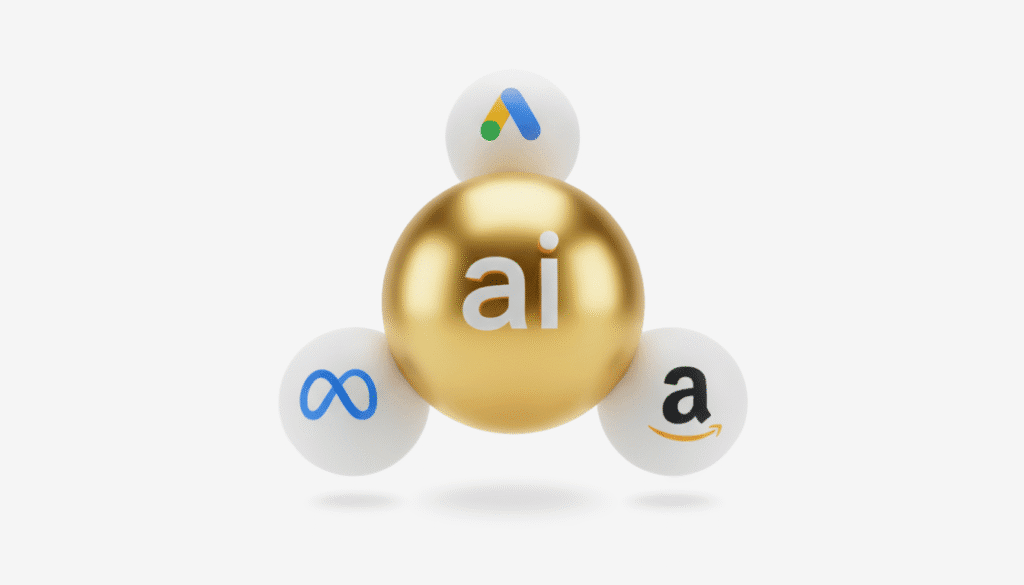
As AI advances, platforms like Meta, Google, and Amazon are expected to account for 56% of the U.S. ad market in 2025, up from 51% just two years ago, according to Wall Street Journal data. In this highly competitive landscape, these companies are taking full advantage of AI to enhance the targeting and relevance of ads.
Google, which once lagged in the AI race, has made a dramatic comeback. Alphabet, Google’s parent company, reported a $1 trillion increase in market value over the past four months, surpassing previous growth rates seen in the last two and a half years. This resurgence is due in part to Google’s heavy investment in AI-powered search and AI-driven ad placements. As AI continues to optimize ad serving, Google has increased the number of commercial queries and search conversations, significantly boosting ad revenue.
Meta Leads the Way in Social Ad Innovation
Meta’s investment in AI has enhanced its advertising model, particularly through Instagram and Facebook. As Meta increasingly integrates AI into its recommendation system, the result has been more personalized ads that resonate with users. This not only improves engagement but also increases the time users spend on the platforms, driving higher ad impressions and conversions.
Meta’s ability to keep users engaged for longer periods is reflected in its 5% increase in time spent on Facebook. The company has also doubled down on Instagram Stories and Reels, where AI now helps brands craft targeted, video-driven ad campaigns that align with user behavior and preferences. This strategic use of AI has enabled Meta to solidify its position as one of the leading players in the U.S. ad market.
Amazon’s Growing Influence in the Ad Space
Amazon, traditionally known for its e-commerce platform, is fast becoming a key player in the digital ad market by capitalizing on its vast consumer purchase data. Amazon’s AI-driven ad targeting is particularly effective in capturing high-intent buyers, allowing it to challenge Google and Meta for a larger share of the ad pie. The combination of AI’s ability to analyze purchasing behavior and Amazon’s rich data on consumer habits positions the company as a formidable competitor in the ad space.
In 2025, Amazon is expected to continue expanding its ad revenue, making it a critical player alongside Meta and Google. With its robust infrastructure and a growing roster of advertisers, Amazon is poised to increase its share of the ad market in the coming years.
The Impact of AI on Ad Targeting and Efficiency
AI’s ability to optimize targeting and improve ad relevance is one of the most significant advantages driving growth in the ad market. As AI becomes more sophisticated, it enables platforms to offer advertisers better targeting and more efficient use of ad spend. This is especially true for platforms like Google Ads, where AI-driven features like Performance Max automatically help advertisers reach their target audience across search, YouTube, and the Google Display Network.
AI’s power to adjust campaigns in real time is making digital ads more efficient and cost-effective. For brands, this means they can get more out of their ad budget, reaching the right people at the right time with tailored messages. The flexibility and automation provided by AI are particularly valuable for brands that need to scale quickly while maintaining performance.
Challenges and Opportunities for Advertisers
With the growing dominance of Google, Meta, and Amazon, advertisers face both challenges and opportunities. As competition for ad space increases, the cost-per-click (CPC) and cost-per-impression (CPM) may rise, especially on platforms that are already saturated with advertisers. The ad giants’ ability to leverage first-party data to improve targeting will also increase the cost of reaching consumers as ad prices rise.
However, there are clear opportunities for brands to capitalize on these advancements. AI’s growing role in ad targeting enables advertisers to reach high-intent audiences who are more likely to convert. Brands that focus on creating personalized, relevant ads that resonate with users can maintain efficiency, even as ad prices climb.
Additionally, AI-driven retargeting can help brands maximize the value of every interaction, keeping potential customers engaged throughout their journey from awareness to purchase. Brands that understand how to effectively use AI to personalize their ads and optimize their targeting will have a significant competitive advantage moving forward.
Ad Spending Growth Fueled by AI
As we look ahead to 2025, the trajectory of U.S. ad spending is clear: AI will remain the primary driver of growth. With projections of $300 billion in ad spending by 2025 and 56% of the market controlled by Meta, Google, and Amazon, the future of digital advertising is increasingly intertwined with AI. For advertisers, the challenge will be not just keeping up with AI advancements but also finding ways to leverage these technologies to maximize their ad spend.
While the ad giants lead the charge, the evolution of AI in advertising is still in its early stages, with even more innovations likely to emerge in the coming years. For brands and marketers, the key will be to stay ahead of the curve by integrating AI optimization into their campaigns while adapting to the changing landscape of digital advertising.