
When Engagement Becomes Evidence
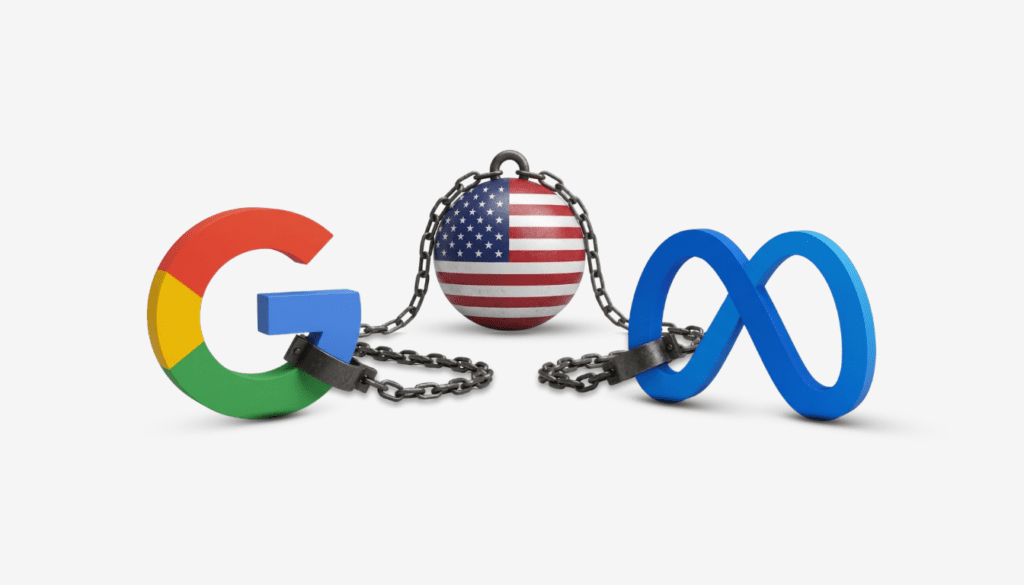
In a decision whose implications are likely to extend far beyond the confines of a single courtroom, a U.S. jury has found Meta and Google liable for contributing to the mental health harm of a young user, in a verdict that signals a legal outcome and a deeper shift in how digital platforms are perceived, evaluated, and ultimately governed. The case, rooted in years of exposure to Instagram and YouTube beginning in adolescence, did not rest solely on the nature of the content consumed, but instead on the underlying architecture of the platforms themselves—how they are designed, how they sustain attention, and how they shape patterns of behavior over time.
This distinction is as consequential as it is subtle, because it shifts the focus away from the long-standing argument that platforms are passive hosts of user-generated content and toward recognizing that they are, in fact, active systems whose design choices exert influence at scale. In doing so, the ruling reframes social media not as a neutral environment in which experiences simply unfold, but as a constructed product whose mechanics can produce measurable—and now legally acknowledged—effects.
The Design Behind the Scroll
At the heart of the case lies a concept that has circulated for years within academic research and industry critique, yet has rarely been affirmed in a legal setting with such clarity: the idea that digital platforms are intentionally engineered to foster compulsive use. Features that once defined the evolution of user experience—such as infinite scroll, autoplay, and increasingly sophisticated recommendation algorithms—were not presented as innovations alone, but as reinforcing loops that encourage prolonged engagement, particularly among younger and more impressionable users.
In this context, the language of optimization begins to take on a different meaning, as systems designed to increase retention and deepen user interaction are recast as mechanisms that may amplify vulnerability rather than simply enhance convenience. The jury’s conclusion suggests that these platforms did not merely host environments in which harm could occur, but actively structured those environments in ways that made such outcomes more likely, elevating design from a neutral consideration to a central factor in the chain of causality.
This new perspective questions the idea that high user engagement is always good. Instead, it suggests that the same measures used to define growth, such as engagement, could also signal potential risks to users.
A Turning Point Reminiscent of Another Industry
As the implications of the ruling begin to unfold, comparisons to earlier moments of industrial reckoning have become increasingly difficult to dismiss, particularly the wave of litigation that reshaped the tobacco industry in the late 20th century. While the products themselves differ in form and function, the structural similarities are striking: both involve widespread consumption prior to full acknowledgment of potential harm, both rely on habitual or repeated use, and both have faced scrutiny over whether risks were adequately disclosed or mitigated.
The significance of this parallel lies not in drawing a direct equivalence but in recognizing the trajectory it suggests, one in which legal accountability becomes the catalyst for broader regulatory intervention, public scrutiny, and eventual transformation of industry practices. If social media is indeed entering a comparable phase, the consequences are unlikely to be confined to isolated cases; instead, they are likely to unfold over years through policy changes, design constraints, and evolving expectations of corporate responsibility.
The Business Model Under Pressure
Beyond the legal ramifications, the ruling places unprecedented pressure on the economic logic that has long underpinned the social media industry, a model built on the seamless conversion of attention into engagement, and engagement into revenue. For more than a decade, platforms have refined systems that prioritize immersion, rewarding longer sessions, higher interaction rates, and continuous user return, all of which translate into increased advertising value.
If seeking attention becomes a legal risk, the business model behind social media becomes unstable. Companies may need to rethink growth, asking if it’s possible to align user well-being with business goals. Metrics like time spent may need reinterpretation.
For advertisers and brands operating within these ecosystems, this shift introduces a new layer of uncertainty, as the predictability of reach and engagement may be influenced by changes in platform design, regulatory oversight, or both. In this sense, the ruling does not simply affect the platforms themselves but reverberates across the broader digital economy that depends on them.
A Wave is Already Forming
If the immediate outcome of the case is significant, its broader impact may prove even more consequential, as it establishes a legal framework that can be applied to a growing number of similar claims. Thousands of cases are already underway, and the verdict offers a tangible precedent for evaluating arguments around platform design, user harm, and corporate responsibility in future proceedings.
This dynamic introduces the possibility of cumulative pressure, in which individual rulings, taken together, begin to reshape the legal landscape, transforming what might initially appear as isolated disputes into a systemic challenge for the industry. As this process unfolds, it is likely to draw increased attention from regulators and policymakers, who may view the courts’ conclusions as a basis for more formalized safeguards to address the identified risks.
The Unresolved Question of Responsibility
Underlying the legal arguments and economic implications is a more nuanced and enduring question, one that resists simple resolution: where responsibility ultimately lies in a digital environment shaped by both design and individual choice. The ruling leans toward a model in which platforms bear a heightened duty of care, particularly when their systems can influence behavior at scale and affect users during formative stages of development.
At the same time, this perspective coexists with competing views that emphasize personal agency, parental oversight, and users’ role in determining how they engage with digital platforms. The tension between these positions is unlikely to dissipate; instead, it will form the basis of an ongoing debate that will influence how laws are written, how products are built, and how responsibility is distributed in the years ahead.
A New Chapter for the Attention Economy
What began as a single legal case now stands as a potential inflection point not only for Meta and Google but also for the broader ecosystem of platforms that have come to define the modern internet. By holding companies accountable not for the content they host, but for the systems they design, the ruling introduces a new dimension of scrutiny that reaches into the core of how digital experiences are created and sustained.
If this precedent is maintained and spreads, it could signal a shift where engagement is no longer pursued without limits. Platform design would then be judged not just on effectiveness, but also on its societal effects. In this environment, the attention economy—traditionally focused on securing user attention—may need to adapt, reconciling its original goals with rising demands for ethical responsibility.