

For years, marketers treated likes, impressions, and follower counts as proof that social media was working. But as executives demand measurable business impact, a growing number of strategists are questioning whether the metrics brands celebrate most are quietly leading them in the wrong direction.
Social media marketing has operated under a relatively simple assumption: visibility equals success. More reach signaled stronger performance, rising follower counts suggested momentum, and a surge in engagement often became shorthand for cultural relevance, creating an environment in which likes, impressions, and video views evolved from simple indicators into symbols of marketing effectiveness. Yet, as brands continue pouring billions into creators, content production, and increasingly expensive platform ecosystems, a growing number of strategists are beginning to question whether the numbers that dominate marketing dashboards have been offering an incomplete—and in some cases deeply misleading—picture of success all along.
That debate now sits at the center of an important shift unfolding across the industry, one increasingly shaped by mounting pressure to prove outcomes rather than activity. Richelle Batuigas, EVP of business intelligence and data strategy at Viral Nation, has emerged as one of the voices challenging one of social media’s most deeply entrenched assumptions: the belief that likes, views, and impressions are reliable indicators of meaningful performance. Instead, Batuigas argues that brands have spent years mistaking visibility for value, celebrating engagement while often failing to ask the more consequential question of whether social media efforts are influencing consideration, shaping perception, improving conversion, or contributing to long-term business growth.
The argument arrives at a particularly revealing moment for marketers, largely because social media itself has evolved into something far more consequential than the awareness tool it once was. What began as an experimental communication channel has steadily transformed into a sprawling ecosystem that simultaneously serves as a discovery engine, entertainment platform, shopping environment, customer service touchpoint, and cultural signal system. Within that reality, visibility alone no longer feels sufficient. Brands increasingly face expectations not merely to appear in culture, but to meaningfully shape conversations, influence behavior, and demonstrate measurable impact.
When Visibility Starts Looking Like Success—But Isn’t
The problem with vanity metrics is not that they hold no value whatsoever. Reach, impressions, engagement rates, and video completion data can still provide useful indicators of audience attention and distribution efficiency, offering marketers a broad understanding of whether content is circulating. The trouble begins when these signals are treated not as inputs, but as evidence of success itself, creating a scenario in which marketers celebrate performance before determining whether anything of substance actually changed.
A campaign may accumulate millions of views without meaningfully shifting consumer preference. A creator partnership might dominate online conversations for days, generating screenshots, reposts, and endless commentary, while producing little measurable impact on purchase intent or brand consideration. Even virality, long romanticized as the ultimate sign of social success, often proves fleeting, producing moments of cultural attention that fade almost as quickly as they emerge, leaving little evidence of sustained commercial value.
In many respects, social platforms have quietly trained brands to optimize for incentives that serve algorithms better than they serve businesses. Because algorithms reward immediacy, emotional intensity, and shareability, marketing teams are frequently pushed to create content that triggers reactions rather than deepens relationships, privileging speed and visibility over sustained strategic resonance.
The result is an increasingly common phenomenon that many marketers are beginning to recognize: a performance illusion in which dashboards appear healthy, engagement spikes inspire internal optimism, and reporting decks suggest momentum, while business outcomes tell a far more complicated story. Visibility rises, mentions increase, audiences react, and yet sales remain stagnant, preference scores fail to improve, or brand differentiation weakens despite an abundance of social activity.
As executive scrutiny of marketing investment intensifies, this disconnect is becoming harder to ignore. Social media is no longer viewed as a soft awareness channel exempt from accountability; rather, it is increasingly expected to contribute measurable value, prompting CMOs and business leaders to ask tougher questions about whether social efforts are moving consumers closer to action, strengthening affinity, or delivering meaningful return on investment. Those questions, increasingly, demand more than impressions.
The Search for a More Meaningful Measure of Influence
At the center of Batuigas’ argument is an attempt to rethink how brands define success in the first place. Through Viral Nation, she has introduced the Cultural Relevance Score, a framework designed to move beyond surface-level engagement toward a more sophisticated understanding of how social performance connects to tangible business outcomes.
The premise reflects a broader transformation taking shape across marketing, where the emphasis is gradually shifting away from measuring whether content simply reached audiences and toward understanding whether it resonated deeply enough to influence perception, shape conversation, or alter behavior.
Rather than focusing solely on scale, the framework evaluates performance across interconnected dimensions that capture both visibility and impact. Awareness remains important, though not merely in terms of exposure; instead, the question becomes whether a brand is present in moments and conversations that genuinely matter within culture and competitive dynamics. Affinity explores emotional connection, asking whether consumers meaningfully identify with a brand, trust its message, or feel aligned with its values and positioning. Velocity, meanwhile, examines how quickly momentum develops relative to competitors, helping marketers understand whether cultural attention is building in a meaningful and sustained way rather than merely appearing in isolated bursts.
The distinction may seem subtle, yet it fundamentally alters how success is interpreted. A million impressions, viewed in isolation, reveal very little. What matters far more is whether those impressions generated stronger emotional resonance than competitors, improved consideration, or accelerated meaningful consumer action.
Increasingly, this reflects a broader evolution across marketing itself, where the quantity of attention is beginning to matter less than the quality of influence it creates.
The Creator Economy Is Quietly Rewriting the Rules
Few areas illustrate this shift more clearly than creator marketing, where brands are becoming increasingly skeptical of the idea that larger audiences automatically translate into stronger outcomes.
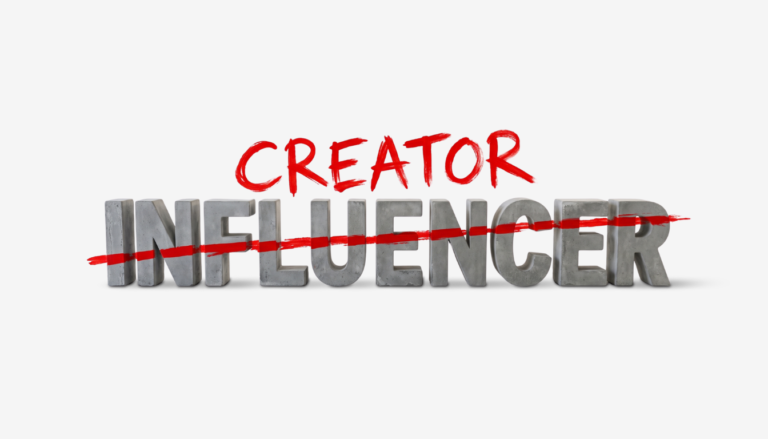
For years, influencer strategies prioritized reach, rewarding creators capable of delivering the greatest scale and the broadest visibility. Yet the maturation of the creator economy is steadily revealing a more nuanced reality: influence is not synonymous with audience size, and not every creator with millions of followers can change consumer behavior.
In many cases, smaller creators with tightly engaged communities are proving more effective precisely because they operate through trust, intimacy, and perceived authenticity, qualities that often translate more naturally into action. As a result, brands are becoming less interested in who can attract the largest audience and increasingly focused on who can inspire movement, shape decisions, and drive measurable outcomes.
This evolution is also casting doubt on long-standing metrics such as earned media value, which has traditionally attempted to estimate what unpaid visibility might have cost had it been purchased through advertising. Critics increasingly argue that the metric frequently rewards exposure without accounting for effectiveness, allowing campaigns to appear successful even when their real-world business impact remains negligible.
As creator partnerships mature, marketers are beginning to prioritize different indicators altogether—brand lift, sentiment change, conversion signals, repeat engagement, and purchase behavior—suggesting that influence itself is increasingly being defined not by visibility, but by outcomes.
Why Artificial Intelligence May Change Social Strategy Entirely
If vanity metrics defined the first chapter of social media marketing, artificial intelligence may ultimately shape the next.
The modern marketer is not suffering from a lack of information; rather, the problem has become an overwhelming abundance of signals, from comment sentiment and audience reactions to creative performance patterns, creator fit, competitive activity, and constantly shifting cultural dynamics. The challenge is no longer access to data but the ability to interpret it quickly enough to make meaningful decisions.
This is precisely where Batuigas sees AI reshaping the future of social strategy. Rather than relying exclusively on instinct or retrospective reporting, marketers are increasingly able to identify patterns explaining why certain creative approaches resonate, which audience segments respond most strongly, and how social interactions correlate with downstream business outcomes. What once depended heavily on intuition is gradually becoming more structured, repeatable, and predictive.
The promise extends beyond simple optimization. Increasingly, brands are seeking something closer to strategic intelligence: the ability to transform social media from an unpredictable content engine into a performance system capable of diagnosing resonance, refining creative decisions in real time, and generating measurable business impact with greater consistency.
Such a shift may ultimately redefine the role of social teams themselves, positioning them less as trend chasers and more as architects of cultural relevance designed to produce lasting commercial value.
The End of the Vanity Metric Era
Perhaps the deeper question beneath this conversation is whether marketing has reached a turning point in how it understands success online.
For years, social media was granted unusual flexibility, in part because its role within the customer journey seemed difficult to quantify and because marketers accepted softer measurements as the cost of participating in digital culture. Yet as platforms increasingly shape discovery, influence purchasing decisions, and inform brand perception at nearly every stage of the funnel, tolerance for vague reporting is beginning to disappear.
Executives are no longer satisfied knowing whether audiences merely saw the content. What they increasingly want to understand is whether anything changed as a result.
That shift in expectation may quietly rewrite the rules of social strategy altogether. Brands that continue optimizing primarily for likes and visibility may eventually discover they have mastered attention while struggling to create relevance or sustained growth. Meanwhile, those willing to rethink how success is measured may find themselves building something far more durable: social systems capable of generating not only visibility, but influence, loyalty, and measurable business outcomes.
The uncomfortable truth emerging from this debate is that social media itself may never have been the problem. The problem, instead, may be that marketers have spent years measuring the wrong things.