
The Most Invisible Generation
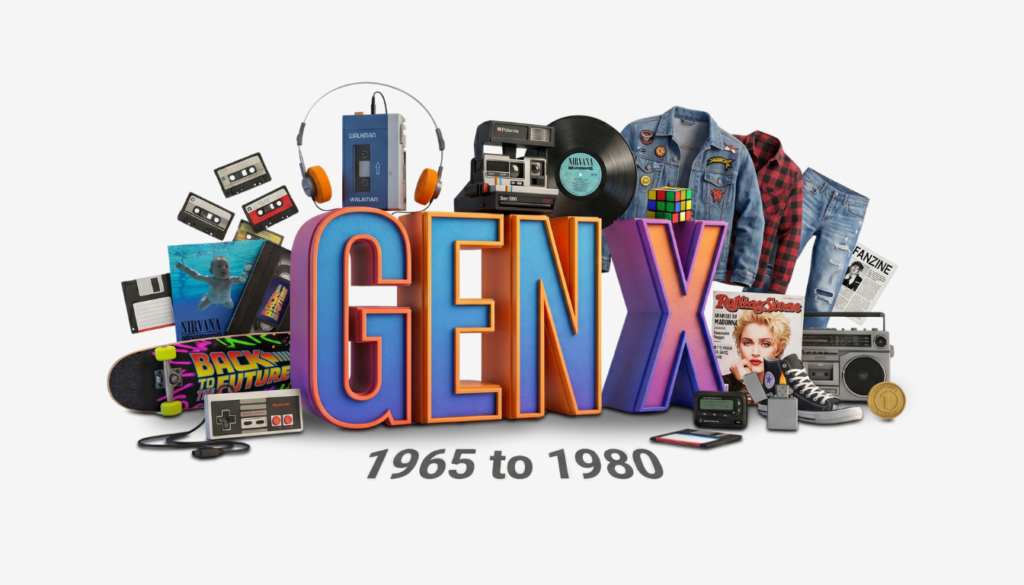
Generation X — Americans born roughly between 1965 and 1980, now aged in their mid-40s to early 60s — has been called the forgotten generation for as long as cultural observers have been writing about generational dynamics. Sandwiched between the demographically dominant Baby Boomers and the culturally irresistible Millennials, Gen X has historically been too small to command the same attention, too old to be aspirational, and too young to trigger the age-related product categories that large advertisers reliably invest in. The result is a generation that entered its peak earning years largely unacknowledged by the brands whose products it purchased.
New research from consumer insights firm Curion, based on a survey of 7,000 Americans aged 50 and above, has now put data around what Gen Xers have long felt anecdotally: 93% say brand messaging misses them entirely. Only 6.5% of respondents said marketing aimed at consumers over 50 feels authentically designed for people like them. The majority believe brands focus too heavily on younger audiences. What they see instead, when they do appear in advertising, tells its own story: ads for reverse mortgages, hearing aids, nighttime incontinence products, and — in one case that Curion’s VP of strategic insights, Maureen Moran Evans, cited with some amusement — a soap that promised to eliminate what it called “old person smell.”
The Dollars Being Ignored
The financial scale of this misalignment is not marginal. Gen X accounts for approximately $5 trillion in consumer spending in the United States. According to analysis by the World Economic Forum, as of 2021, Gen Xers were leading global consumer spending and are projected to continue doing so through 2033 — meaning that the generation currently receiving the lowest share of advertising attention and relevance is simultaneously the generation that controls the largest share of spending power. Nearly half of adults aged 50 and above are the primary household decision-makers in major consumer categories, including clothing, food and beverages, and household goods.
The phrase that Curion’s report used to characterize what is happening deserves to be read carefully: “The 50-plus consumer is not aging out of relevance. Brands are aging out of alignment.” That formulation inverts the conventional narrative — that these consumers are declining in commercial significance — and correctly identifies the direction of the problem. It is not the consumers who have changed. It is the brands that have failed to update their mental model of who these consumers are and what they are doing with their lives.
Why the Industry Got Here
Understanding how the advertising industry arrived at this point requires examining the structural forces that shaped it rather than attributing it solely to the laziness of individual campaigns. Maureen Moran Evans identified several contributing factors in her analysis, which together form a coherent picture of an industry that has been systematically misallocating its attention. The first is a generational skew within the industry itself: only 12% of advertising professionals are aged 55 to 65, while those aged 25 to 44 make up more than half the workforce. An industry populated predominantly by people in their 20s and 30s will naturally produce advertising that reflects their own cultural references, aspirations, and assumptions about what constitutes a desirable consumer — and those assumptions tend to exclude the 50-plus consumer as a matter of reflex rather than deliberate strategy.
The second factor is the rise of influencer-led marketing, which has amplified the industry’s youth orientation by tying a significant portion of paid media investment to platforms and creators whose audiences skew heavily young. TikTok, Instagram, and YouTube creator partnerships are legitimate and often effective channels, but they have further concentrated marketing attention and budget in demographics that already received disproportionate investment, while the $5 trillion in Gen X spending power has remained largely unlocked.
The third factor — perhaps the most insidious — is a failure to distinguish between Gen X and Baby Boomers, treating both as an undifferentiated mass of “older consumers” whose needs and cultural references are interchangeable. They are not. Gen X came of age with MTV, the internet, hip-hop, and a set of formative cultural experiences that have nothing in common with those of their Boomer predecessors. A person who was 20 years old in 1985 and a person who was 20 years old in 1965 are not the same consumer, even though both are now over 50. Treating them as such produces advertising that alienates both.
The Opportunity That Remains Unclaimed
What makes the Gen X blind spot commercially significant — beyond the obvious revenue implications of ignoring a $5 trillion market — is that the competition for this audience’s attention and loyalty is far less intense than the competition for Millennial or Gen Z attention. A brand that develops genuine fluency in Gen X’s cultural language, that speaks to this cohort as the active, engaged, financially capable adults they are, rather than as patients waiting for their next pharmaceutical prescription, has an opportunity to build loyalty in a segment that is both underserved and deeply brand-aware.
Gen X consumers were, after all, the first generation that grew up with modern advertising as a cultural force. They understand brand language with a sophistication that comes from decades of exposure. When a brand does speak to them honestly, the response tends to be disproportionately strong. Moran Evans described encountering 50-somethings who are still “out and about, meeting for dinner or drinks, buying clothes” — behaving, in other words, exactly as they always have, except that the marketing industry has collectively decided they no longer count.
The industry built its mythology around the idea that capturing a consumer young creates lifelong loyalty. That premise may be true, but it does not follow that failing to capture a consumer young means they are lost. It means they are waiting. The brands that figure out how to speak to Gen X as the generation it actually is — rather than as a demographic footnote between two more fashionable cohorts — will discover an audience that has been underestimated for its entire adult life and is ready to reward anyone who notices.