
The Feedback Loop Nobody Designed
The mechanism that produces this problem is not a conspiracy. It is a structural consequence of how programmatic advertising works at scale. When a brand or its agency sets up a programmatic campaign, the system’s objective is to find the cheapest, most efficient inventory that delivers the desired audience signal at the desired cost. Made-for-advertising websites, designed primarily to capture ad revenue rather than serve genuine readers, have always existed in the programmatic supply chain. What artificial intelligence has done is dramatically reduce the cost and accelerate the rate at which such sites can be created and populated with content.
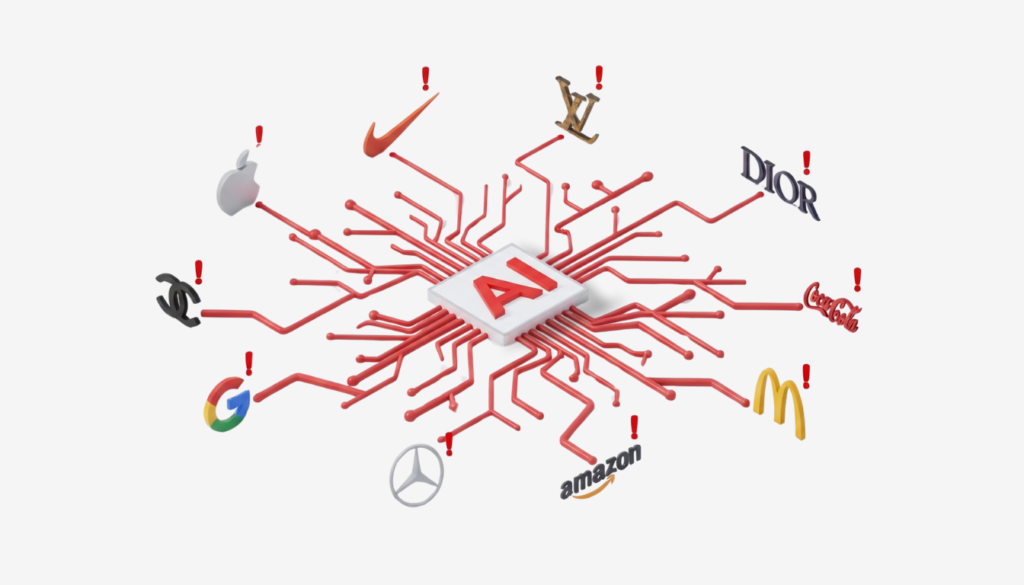
A NewsGuard investigation tracked 141 major brands, including banks, financial services firms, luxury retailers, and streaming services, whose programmatic advertising appeared on unreliable AI-generated news and information sites. In more than 90% of cases, the ads were served by Google’s programmatic infrastructure. The brands were, in most cases, unaware their ads appeared on these sites at all. The content alongside those ads included AI-generated articles containing factual errors, fabricated quotes attributed to real public figures, health misinformation, and political disinformation. The irony that some of those fabricated stories concerned the very brands funding the sites’ revenue was not lost on industry observers.
The Specific Risk Brands Face
The problem operates on two simultaneous dimensions, and understanding both is necessary for grasping why it is harder to solve than it appears. The first is the brand safety dimension: advertisements appearing alongside false or harmful content generate a contextual association between the brand and that content, regardless of whether the placement was intentional. Research consistently shows that consumers attribute some level of endorsement to advertisers on pages they visit, even when the placement is clearly programmatic.
The second dimension is more direct and counterintuitive: brands are sometimes funding the specific misinformation being spread about themselves. An AI content site that generates fabricated stories about a brand’s product recall, executive misconduct, or regulatory violation will monetize that content through programmatic advertising. If the brand’s own campaign is active and its targeting parameters overlap with the site’s audience profile, the brand’s ads may appear on the very page containing false claims about it. The UN’s Department of Global Communications made the structural argument explicit in a brief published in April 2026: “Advertising funds the systems that help shape what people see, trust and believe.”
What the Industry’s Data Reveals
An IAB study conducted with Aymara found that over 70% of marketers had already encountered an AI-related incident in their advertising, including hallucinations or placements on inappropriate sites, yet fewer than 35% planned to increase investment in AI governance over the following 12 months. The industry knows the problem exists. It is not, as a whole, investing in solving it at a pace proportionate to the risk.
The explanation is partially structural and partially incentive-driven. Brand safety tools exist, including contextual targeting, curated marketplace deals, publisher allowlists, and third-party verification through IAS and DoubleVerify, but they add friction and cost to programmatic buying in ways that make campaign efficiency metrics look worse, even when they produce better actual outcomes. The optimization logic of programmatic systems runs counter to the precautionary logic of brand safety: a cheaper impression is a better impression by the system’s internal measure, and the downstream cost of a brand safety failure is diffuse, delayed, and difficult to attribute to the original placement decision.
What Needs to Change
The path toward resolving this requires decisions at the organizational level that most brands have not yet made. The first is establishing explicit accountability for AI-related brand risk inside the marketing function: a role or team responsible for understanding where programmatic spend flows, what content is being funded, and what verification infrastructure is in place. The second is treating curated marketplace deals and publisher allowlists as baseline requirements for any campaign where brand context matters, not optional premium add-ons. The third is pressing the programmatic supply chain for transparency it has historically resisted providing. Brands collectively represent the demand side of a market where the supply side controls what content gets funded. The leverage exists; the willingness to use it is what the industry still lacks.