
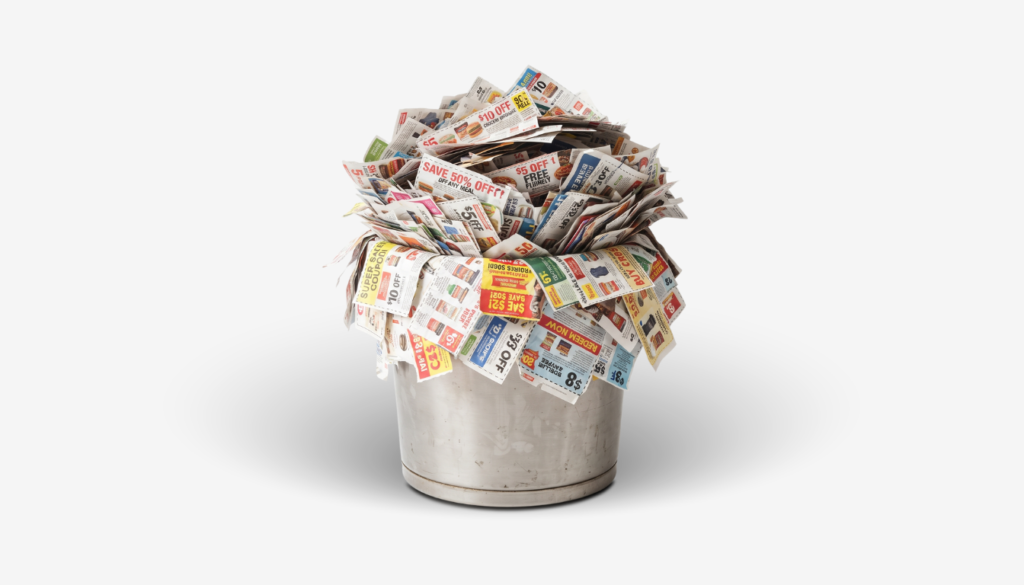
The Discount Death Spiral
Promotions are among the most common tools in marketing and also among the most wasteful. Research from incentives platform Talon.One, produced with WPP Enterprise Solutions and the agency Mando, estimates that brands discount away roughly 20% of revenue each year, often for returns that fall short of the investment. In fashion, the reliance runs deeper still: markdowns can account for as much as 30% to 40% of a company’s revenues, a figure that shows how central promotional activity has become to the category’s economics.
Talon.One’s chief executive, Christoph Gerber, describes the pattern as a cycle that trains customers to wait for the next price cut, eroding both margin and brand equity with every repetition. The report, drawing on a Censuswide survey of 2,000 UK consumers and a System1 Group study of 1,800 respondents across six markets, argues that the discount habit produces short-term transactions while draining the long-term value a brand is trying to build. The immediate spike looks compelling. The compounding cost rarely shows up on the same dashboard.
What Consumers Actually Remember
The consumer data complicates the case for reflexive discounting. More than half of shoppers, 51%, say a creative promotion would make them try a brand for the first time, and the same share prefer promotions that go beyond a simple price reduction. Yet nearly one in three, 29%, cannot recall a single memorable promotion they have received, and about half describe the offers they get as generic or irrelevant. The volume of promotions is high; the number that leave an impression is low.
There is also a durable brand payoff that price cuts do not deliver. Some 37% of consumers say a promotion has made them feel more positively about a brand beyond the money saved, a figure that climbs to 56% among 18-to-34-year-olds. That gap points to a specific opportunity with younger audiences, who respond more strongly to promotions designed to build affinity rather than only to move product. Appetite for play is measurable too: 41% of consumers say they enjoy a game or challenge in a promotion, and roughly two-thirds are aware of or have taken part in McDonald’s Monopoly, a share that rises to about 80% among younger consumers.
Eight Ways to Create Value Beyond Price
To give marketers an alternative to the discount default, the report introduces a framework of eight creative currencies, distinct forms of non-financial value a brand can offer. They span gamified mechanics, cultural moments, social recognition, aspirational rewards, and purpose-driven initiatives, along with the appeal of exclusivity and belonging. The underlying idea is a reframing of what value means. Price is one currency, but so are recognition, play, purpose, and access, and the brands winning on promotions ask what their customers actually care about rather than how deep to cut.
Supporting research reinforces the point. System1’s testing found that gamified mechanics consistently outperform straightforward discounts on the metrics tied to long-term brand value, including memorability, excitement, and distinctiveness. Mando’s tracking shows that creative rewards such as gift-with-purchase, instant-win, and prize draws achieve participation rates close to the familiar cashback mechanic, which suggests these formats are viable at scale rather than niche experiments. The evidence points toward creative promotions as a competitive alternative to discount-led strategy, not a risky departure from it.
Why Execution Is the Real Barrier
The catch is that appeal does not automatically translate into participation, and the reason is usually execution rather than preference. Consumers are more open to creative formats than raw participation numbers suggest; the barrier tends to be visibility and the operational difficulty of running these mechanics well. Creativity in a promotion is not only about the concept. It depends on the infrastructure to deliver that concept consistently, quickly, and across every channel where customers actually are.
That is where the strategic decision sits for most brands. Moving beyond the discount default is less a creative leap than an operational commitment, requiring the systems to design, launch, and measure varied incentives without falling back on the one lever that is easiest to pull. The report’s argument is that the brands investing in creative execution, not just price reduction, are the ones building relationships that outlast the offer. For marketers under pressure to deliver short-term results, the harder path is also the one that stops training customers to wait for the next markdown.