
Beautytainment Becomes a Media Thesis
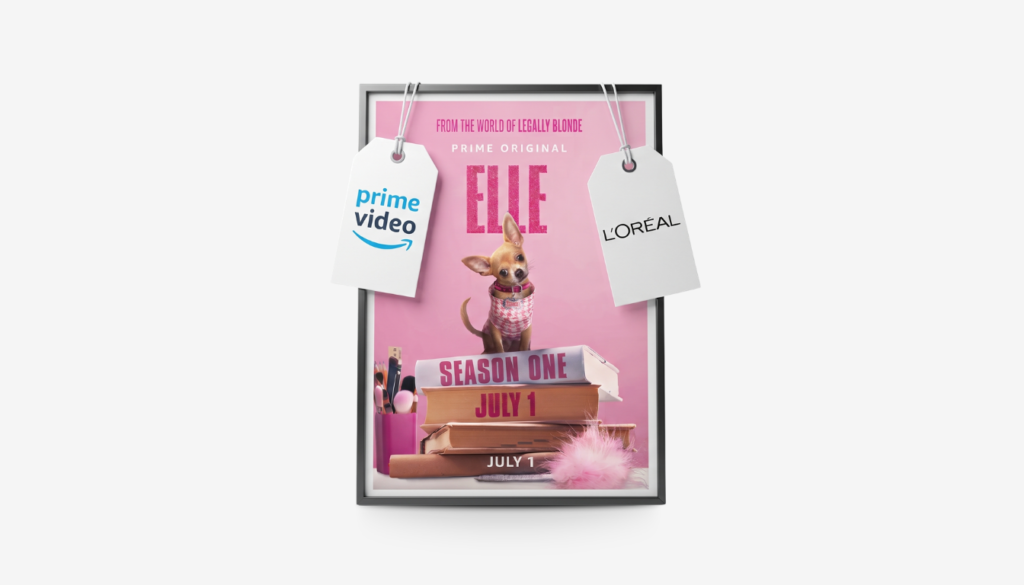
“Elle,” Prime Video’s new Legally Blonde prequel, has turned into one of the most instructive marketing case studies of the year, and not because of a single standout ad. Set in 1995 and built around Elle Woods’ formative high-school years, the eight-episode series arrives with decades of built-in fandom across generations. L’Oréal Paris signed on as global sponsor across ten markets, with Swisse joining as a local partner in Australia, and used the show to demonstrate what its chief digital and marketing officer, Georgia Hack, calls “Beautytainment,” the deliberate intersection of beauty, entertainment, and culture. The thesis is easy to state and hard to execute. Beauty brands should not sit beside culture, they should become part of it, and the show was engineered to prove the point.
One Screen, Three Layers of Selling
What makes the partnership notable is how many selling surfaces operate at the same time. In the series, ads are effectively everywhere, even when viewers might not register them as ads. The show’s star, Lexi Minetree, appears inside the narrative and also fronts a L’Oréal spot that runs during the commercial breaks of the very same episode. The series is then referenced across corresponding social content, stretching the brand association far beyond the runtime. Underneath all of it sits what L’Oréal describes as the “Amazon Canvas,” a path that lets viewers discover products within the show, engage with the creative, and continue into a custom L’Oréal Paris store on Amazon without leaving the environment. Streaming, shopping, and browsing signals feed back into the brand’s read on how each touchpoint drives discovery, engagement, and conversion.
The Holy Grail Marketers Keep Chasing
Hack frames the payoff in commercial terms, describing the arrangement as the integration of upper-funnel storytelling with lower-funnel transaction. In her account, the model captures the emotional intent that premium entertainment generates and converts it inside the same surface, collapsing the distance between wanting and buying. She also argues that audiences are no longer merely open to shoppable television, they now expect it, because the friction between inspiration and acquisition has largely disappeared. For a brand that has always traded on aspiration, closing the loop from screen to basket in one place becomes a structural advantage rather than a one-time stunt. It reframes an entertainment sponsorship as performance media with a story attached, which is a meaningfully different proposition for a chief marketing officer defending a budget.
Why the Talent Pool Is Widening
The strategic ripples extend well past a single beauty house. As content and entertainment move to the center of brand strategy, companies are rethinking who they hire to build these programs. Business of Fashion reports that brands from Gap to E.l.f. are broadening the talent pool, weighing everyone from entertainment intellectual-property experts to filmmakers alongside traditional marketers. The competency that matters is shifting away from campaign production and toward IP stewardship, narrative development, and the ability to negotiate a brand’s role inside someone else’s story without breaking that story. L’Oréal is already applying the same playbook to its work around the coming Devil Wears Prada sequel, treating culturally loaded properties as recurring platforms rather than isolated placements to be bought once and forgotten.
What Marketers Should Take From It
For marketing teams, “Elle” is less a template to copy line for line than a set of conditions to reproduce. The partnership works because the property carries pre-existing emotional weight, because the creative alignment feels native to the plot rather than bolted onto it, and because the retail and measurement stack behind it can actually connect fandom to purchase. Nostalgia operates here as a Gen Z lever rather than a boomer one, which widens the addressable audience instead of narrowing it. The takeaway is to secure equity in properties an audience already cares about, protect the authenticity of the integration even when that limits the number of logos on screen, and invest in the infrastructure that converts attention into attributable outcomes. Product placement is no longer a logo resting in the background of a scene. It is becoming an operating system for how brands enter culture and prove the return.