
The turnaround that analysts doubted
In 2021, Wendy’s passed Burger King to become the second-largest burger chain in the United States, trailing only an untouchable McDonald’s. The demotion was deserved. For most of the previous decade, Burger King ran on what looked less like a strategy than a condition, a case of advertising attention deficit disorder. There was a subservient chicken that obeyed whatever users typed, a plastic king who climbed into strangers’ beds, a Whopper offered in exchange for unfriending ten people on Facebook, a public marriage proposal to McDonald’s, and an infamous tweet the brand would rather forget. Award juries adored the work. Customers overlooked it. Every campaign arrived in a different tone, chased a different insight, and sold a different idea. The only thing consistent about Burger King’s marketing was its inconsistency, and while the ads chased trophies, the rest of the business was left to age. The menu bloated. The restaurants tired. Then Burger King did the one thing its rivals almost never try. It stopped.
What discipline actually bought
In 2022 the company launched Reclaim the Flame, a $400 million commitment that directed more than $150 million into advertising and roughly $250 million into remodeling worn-out restaurants. Management told Wall Street plainly that the plan would dilute earnings for two years before it paid back, a rare and candid account of what a turnaround actually costs: money now, results later, analysts unimpressed in between. Money was the easy part. Discipline was the real change. Burger King chose a single brand platform, You Rule, launched late in 2022 behind a Whopper jingle catchy enough to annoy the country into singing along. Four years later it still runs. Two decades of campaign promiscuity gave way to something close to monogamy, and for the first time in memory the brand said one thing and kept saying it.
The rest of the mix joined in
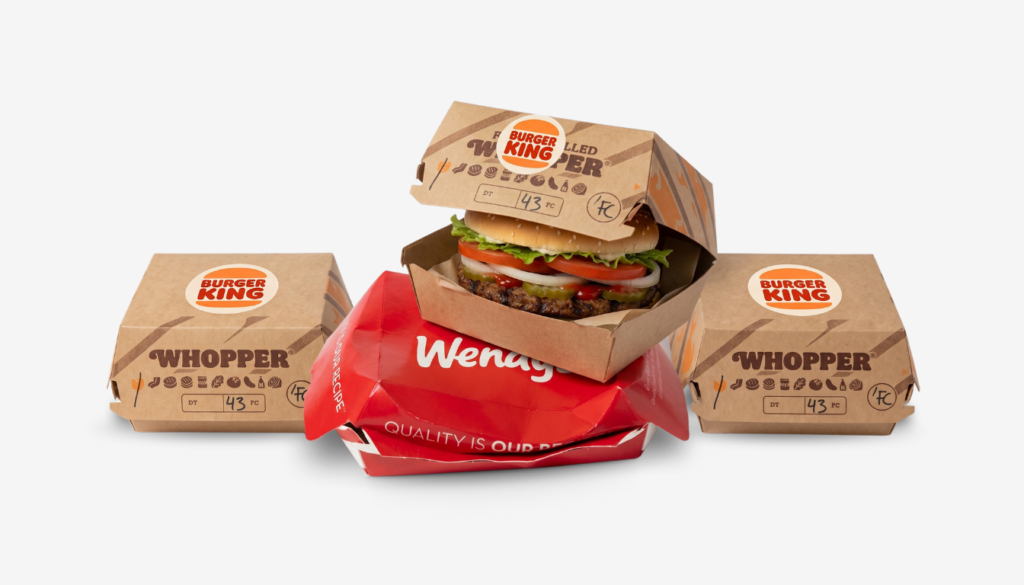
A slogan alone does not rebuild a business, and this time the discipline reached every part of the operation. Burger King reformulated the Whopper this year with a better bun, improved sauces, and new packaging, then backed the promise with a guarantee of a free burger whenever an order comes out wrong. It set a target of a fully modern restaurant estate by 2028 and replaced years of coupon chaos with one coherent value message. It handed day-to-day operations to Tom Curtis, among the most respected operators in quick-service restaurants. Positioning, product, place, and price, the parts of marketing that never trend, were finally pulling in the same direction as the advertising rather than against it.
The numbers arrived on schedule
Patience delivered what the plan promised. Burger King has now grown U.S. same-store sales for five consecutive quarters, the most recent up 8.5%. Last week the chain overtook Wendy’s to reclaim the second-place position it had lost six years earlier. McDonald’s still towers over the category, so this remains a fight for a distant silver medal. What makes it notable is how it was won. Burger King did not out-clever anyone. It repaired the ordinary machinery of running restaurants, and the market rewarded the repair. Restaurant Brands International, the parent company, has treated the recovery as evidence that operational patience, not marketing noise, is what actually moves a quick-service business.
Wendy’s forgot its own lesson
The reversal stings more because Wendy’s rise was built on the exact discipline Burger King rediscovered. Fresh, never frozen beef gave it a real product truth. A sharp social voice gave it fame, including the most retweeted post in the history of the internet. A properly funded national breakfast launch gave it growth. Then the fundamentals slipped. Wendy’s spent 2024 explaining surge pricing to a furious internet instead of defending its advantages, and the decline set in. It has now posted a sixth straight quarterly drop, this one down 7%. It withdrew its financial outlook, halved its dividend, and welcomed its third chief executive in three years. The brand that taught the industry about consistency stopped living by it.
The lesson marketers keep relearning
Burger King’s comeback is not a story about a brilliant campaign. It is a story about the refusal to keep making them. The work that moved the business was unglamorous: one message held for years, a product worth ordering, restaurants worth entering, and prices a customer can understand without a coupon decoder. None of it wins a Grand Prix. All of it wins customers. For marketers under constant pressure to manufacture the next viral moment, the harder and more valuable discipline may be the opposite one, choosing a single idea and staying with it long enough for the market to notice. Burger King’s plan already stretches past 2028, which means the gap between the two brands is more likely to widen than close. Wendy’s cannot discount its way out. It needs what its rival needed in 2021: a candid diagnosis, a single strategy, every part of the mix aligned behind it, and the patience to fund several unspectacular years of repair.