
Fashion’s marketing playbook took a decisive turn this summer, and it points backward. After a year defined by AI experimentation and platform noise, campaigns from luxury houses to mass-market labels are leaning into memory, warmth, and analog texture, selling nostalgia as relief to consumers worn down by algorithmic feeds and synthetic imagery. The pivot marks a broader recalibration in how brands entertain, engage, and earn trust in a market saturated with what many in the industry now call AI slop.
Slower Advertising Returns as a Strategy
For much of the past two years, fashion marketing chased velocity. Brands flooded feeds with high-frequency content, tested generative tools, and optimized for the scroll. The 2026 campaign cycle reads as a correction. Marketers are choosing slower, more deliberate creative, taking measured risks and prioritizing human connection over raw output.
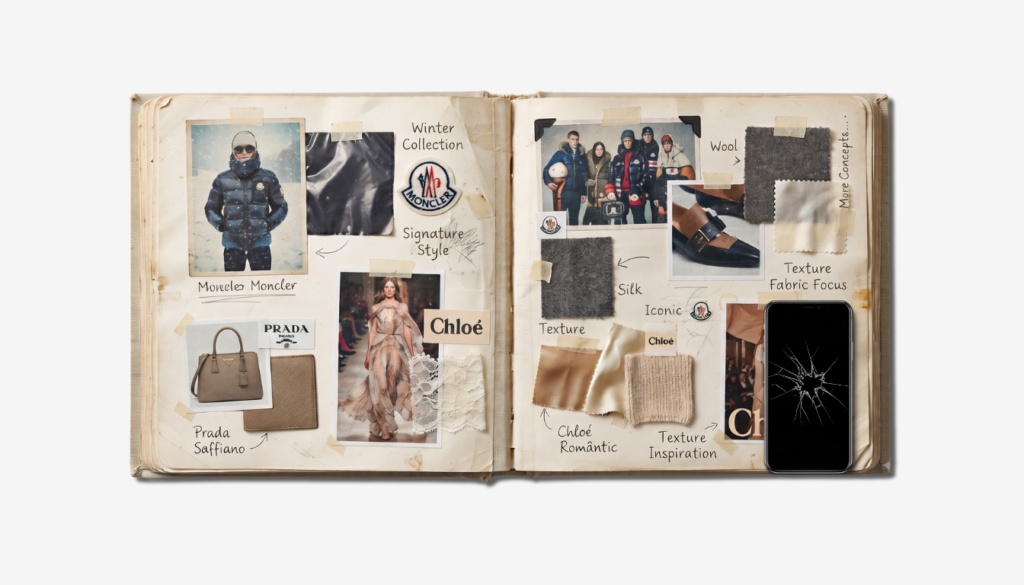
The visual language carries the message. Moncler set its spring campaign in a hushed, sunlit Rome, casting Italian actors Francesco Scianna and Celeste Dalla Porta against cobbled squares rendered in beige, cream, and stone. Prada staged its Days of Summer imagery on pristine sand before letting the chaos of the city intrude, a deliberate collision of serenity and disruption. Chloé placed Apple Martin before a giant shell in muted florals and eyelet lace, evoking a free-spirited, almost pre-digital ease. Each campaign trades spectacle for stillness, wagering that calm now reads as luxury.
Memory Becomes the Product
The nostalgia extends past aesthetics into the objects brands choose to associate with taste. Fashion houses from Coach to Dior have been folding literature into their marketing, positioning books as markers of knowledge and discernment in an age of visual overload. In a culture flooded with images, the printed page signals patience and depth, qualities that photograph as authenticity and separate a brand from the infinite feed.
Guess USA ran its recognizable Americana through a romantic lens, stitching lace into denim and pairing airy chiffon with trucker jackets in a late-nineties revival that references the label’s own archive. Other houses framed travel as contemplative escape rather than conspicuous consumption, placing subjects on quiet platforms and sunlit trains. The common thread is emotional resonance. Brands are transforming collective memories of simpler times into marketing material, converting a diffuse cultural longing into product desire.
The Aesthetic Is Getting Crowded
The risk in a shared strategy is sameness. With so many labels reaching for the same warm palettes, cinematic pacing, and analog cues, retro escapism is fast becoming a crowded lane. When minimalism and nostalgia dominate an entire season, the very differentiation that made the approach effective begins to erode. A muted campaign that felt distinctive in isolation can dissolve into the feed alongside a dozen others working the same register.
That crowding raises the stakes on execution. The campaigns earning attention are the ones built on a specific point of view rather than a borrowed mood. Moncler’s Rome is legible as Moncler; Prada’s tension between order and disorder carries the house’s fingerprints. Nostalgia without a brand’s distinct signature reads as pastiche, and consumers fluent in visual culture register the difference immediately.
What the Shift Signals for Marketers
For marketers watching from outside fashion, the summer cycle offers a usable lesson about timing and tone. The retreat into nostalgia is less about the past than about trust. As synthetic content proliferates and audiences grow skeptical of what they see, brands are competing on the perception of human authorship. The tactile, the handmade, and the remembered all function as trust signals, shorthand for a brand that slowed down enough to care about the person on the other side of the screen.
The approach carries a caution worth naming. Nostalgia works when it connects to something a brand can credibly own, and it curdles into imitation when it does not. The labels succeeding this season started with a clear idea of what a simpler moment means to their specific customer, then built the visuals around that insight. As the broader market splits between brands marketing human-made warmth and those pushing deeper into AI production, the summer’s campaigns suggest the audience is, for now, rewarding the work that feels made by people.