
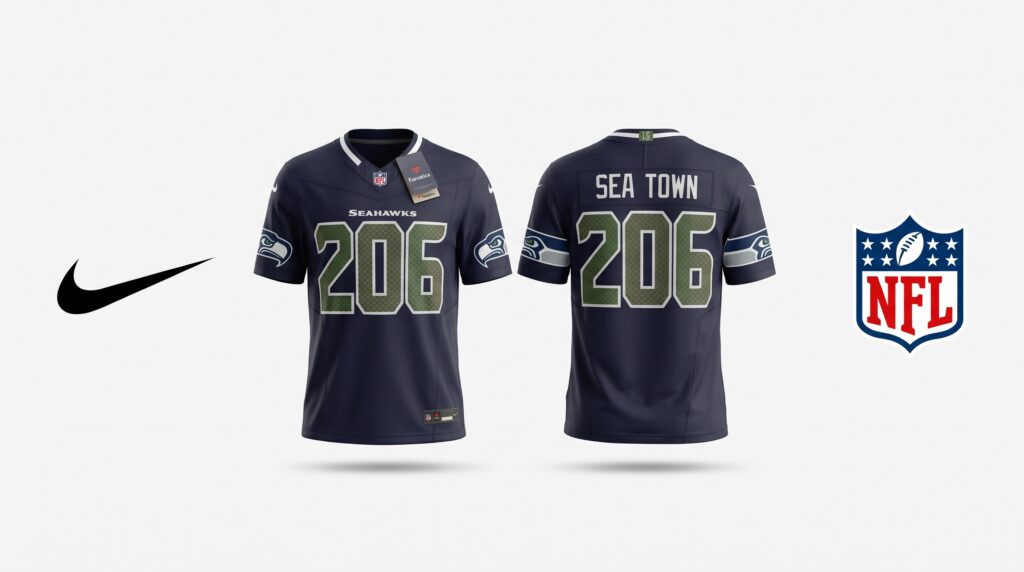
A uniform reveal used to be a footnote to the season. Nike and the NFL have turned it into a marketing platform. The two unveiled the 2026 Rivalries uniforms alongside coinciding fan apparel made and sold by Fanatics, expanding a program that launched only a year earlier into eight teams across two divisions, the AFC South and the NFC North. What began as a jersey drop has become a recurring, community-rooted franchise, and its structure is a lesson in how to build a repeatable engine out of the emotion sports fans already carry.
From Jersey Drop to Franchise
The Rivalries program debuted in 2025 and, according to the partners, became Fanatics’ best-selling merchandise release to date. That result is the reason the 2026 edition exists and the reason it grew. Success turned a one-time idea into an annual expectation, this year bringing in the Houston Texans, Tennessee Titans, Jacksonville Jaguars, and Indianapolis Colts from the AFC South and the Chicago Bears, Minnesota Vikings, Green Bay Packers, and Detroit Lions from the NFC North. Building an annual cadence is what converts a hit into a platform. Fans now know a reveal is coming, retailers can plan around it, and Nike and the league own a fixture on the calendar they can return to and enlarge each year.
Local Roots as the Creative Engine
The creative is deliberately local. Each participating team brings its uniform to life through its own visual campaign, set in the community where the rivalry actually lives, rather than through a single national film handed down from headquarters. The 2026 rollout leans on hometown talent and regional identity, drawing in players and legends such as Jameson Williams, Jordan Love, Nico Collins, Sauce Gardner, and Randy Moss, along with hometown musicians including Big Sean, Slim Thug, and Bun B. Rivalry is one of the few emotions in culture that is inherently local, tied to a city, a history, and a set of grievances outsiders do not share, and by rooting the campaign in those specifics the program turns a national merchandise push into something that feels personal in each market.
The Commerce Layer
The reveal is engineered to convert. Rivalries jerseys and fan gear go on sale September 1 across nike.com, NFLshop.com, fanatics.com, team stores, and select retail, timing the marketing moment to an immediate commerce window. Fanatics is the connective tissue, manufacturing and selling the fan apparel that lets a consumer act on the excitement the campaign generates within days rather than months. This is content and commerce built as a single loop. The campaign creates desire, the merchandise is ready the moment that desire peaks, and the same rivalry story that drives attention also drives the sale. The reveal is simultaneously the advertisement and the product launch.
Why Rivalry Is the Right Product to Sell
Of all the energy in sports, rivalry is the most durable and the most tribal. Teams rise and fall, stars come and go, but the animosity between two franchises and their cities compounds across generations. By productizing that tribalism, Nike and the NFL tap a renewable emotional resource that does not depend on any single season’s results. An annual reveal adds scarcity and ritual on top of that base, giving fans a reason to buy now and a fresh set of designs to anticipate next year. It is a rare case where the emotional logic and the commercial logic point in exactly the same direction, because the thing that makes fans care is the same thing that makes them buy.
The Risk of Over-Milking a Good Idea
The threat to the program is its own success. Manufactured scarcity works until audiences feel manufactured to, and an annual expansion risks diluting the specialness that made the first drop sell out. If Rivalries grows to cover the whole league, the word rivalry starts to describe a merchandising calendar rather than a genuine feud, and fans notice when authenticity is retrofitted onto a commerce program. Jersey fatigue is real, and the line between honoring a rivalry and exploiting it is thin. Nike and the NFL will have to keep the storytelling rooted in real local identity, because the moment the community campaigns start to feel interchangeable, the platform loses the very thing that distinguishes it from an ordinary apparel release.
What Marketers Should Take
The program is a model for building an ownable platform out of a recurring moment. Nike and the NFL took a fixture that already existed, the uniform, and layered on annual cadence, local storytelling, and an integrated commerce partner to turn it into a franchise that markets and monetizes itself. The transferable lessons are concrete. Anchor a global brand in local identity, because specificity is what makes people feel seen. Pair the content with a commerce mechanism ready to capture demand at its peak. And treat a calendar moment not as a one-off campaign but as a platform that can compound year over year, as long as the emotional truth underneath it is real enough to survive being sold.