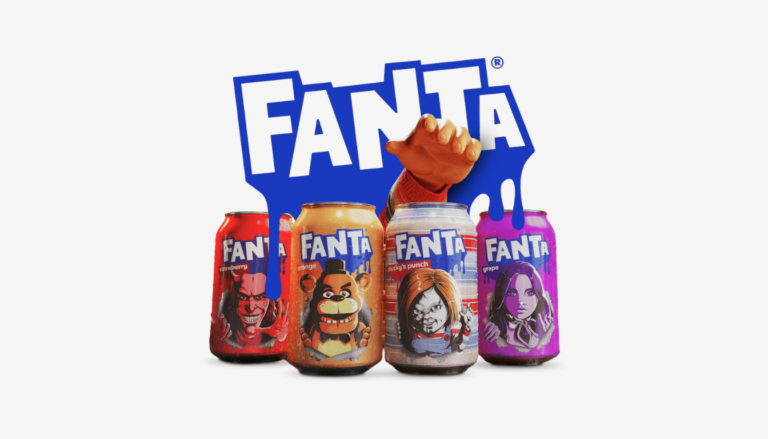

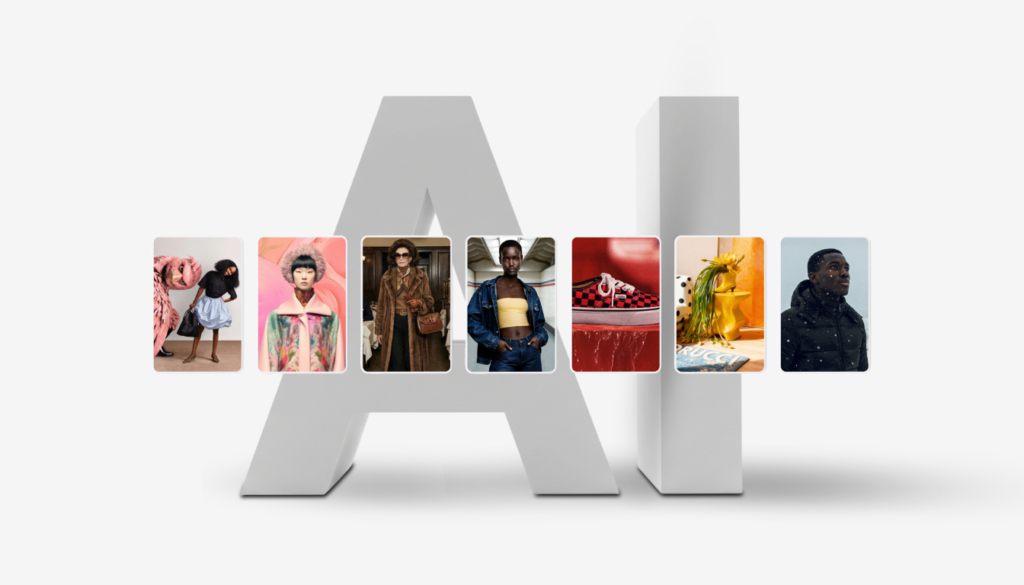
Artificial intelligence has ushered in a new era of advertising defined by speed, scale, and an almost unsettling level of visual precision, allowing campaigns that once required extensive production timelines to be generated in a matter of hours, often with outputs so refined that they blur the line between simulation and reality. For marketers, the appeal is undeniable, offering a combination of efficiency, cost reduction, and an expanded creative canvas that seems to promise more possibilities than ever before.
And yet, as AI-generated campaigns become increasingly prevalent, a paradox has begun to emerge, one that extends far beyond aesthetics. The same technology that enables brands to produce more content, more quickly, and with greater consistency is also contributing to a growing sense of sameness, where perfection no longer signals distinction but begins to feel generic, even interchangeable.
This tension has been particularly visible in fashion, where recent AI-driven campaigns from brands such as Prada, Valentino, and Gucci have sparked both fascination and unease, revealing how quickly innovation can shift into discomfort when it appears to challenge the foundations of creativity. However, these reactions are not confined to luxury alone; they reflect a broader recalibration across advertising as a whole, where audiences are no longer impressed by what AI can do but are increasingly questioning why it is being used.
When Technology Becomes the Idea
The campaigns that struggle most in this new landscape tend to share a common underlying issue: they let the technology itself take center stage, turning what should be a tool into the primary message. In doing so, they often produce work that is visually compelling yet conceptually fragile, capturing attention but failing to sustain it.
Within fashion, this tendency has manifested through hyper-polished imagery and surreal compositions that, while technically impressive, often lack a clear emotional anchor, leaving audiences uncertain of what they are meant to feel or understand. In other sectors, the pattern repeats itself through AI-generated storytelling, synthetic influencers, or automated visual narratives that prioritize novelty over depth, creating experiences that are engaging at first glance but quickly fade from memory.
What connects these varied executions is a subtle but decisive misalignment, as the focus shifts from communicating an idea to showcasing a capability, resulting in campaigns that feel more like demonstrations than expressions. In this context, AI does not fail because it is incapable, but because it is unguided, producing outputs that, in the absence of a strong creative vision, begin to resemble one another, reinforcing a broader sense of uniformity.
The Campaigns That Break Through
In contrast, the campaigns that manage to resonate more effectively reveal a different relationship with the technology, one in which AI is neither hidden nor overemphasized, but instead integrated into a broader creative framework that remains distinctly human at its core. These executions do not rely on AI to generate meaning, but rather use it to extend the boundaries of what can be imagined and realized.
In fashion, brands such as Moncler and H&M have demonstrated how AI can support a cohesive artistic direction, enabling new visual languages without abandoning the narrative structures that give their work coherence and identity. Similarly, more experimental labels have embraced the artificiality itself, incorporating it into their aesthetic in ways that feel intentional rather than incidental, transforming what could be perceived as a limitation into a defining characteristic.
Beyond fashion, this principle holds across industries: the most effective AI-driven campaigns prioritize concept over capability, ensuring that the technology serves an idea rather than substituting for it. In these instances, the audience is not merely impressed by the execution but is able to perceive the underlying intention, which ultimately gives the work its lasting impact.
The Growing Divide Between Brands
As AI continues to reshape the creative process, a divide is becoming increasingly apparent, not between industries but between approaches, separating brands that integrate the technology with intention from those that adopt it more opportunistically. This distinction is particularly pronounced in luxury, where heritage and craftsmanship create a framework that is both an asset and a constraint, amplifying the risks associated with experimentation.
For established maisons, the use of AI can be easily interpreted as a departure from the human artistry that underpins their value, creating a tension difficult to resolve without careful consideration. Meanwhile, more contemporary or culturally agile brands operate within a different set of expectations, where digital aesthetics and technological exploration are not only accepted but often anticipated, granting them greater freedom to experiment without compromising their identity.
This divergence, however, is not limited to fashion but is increasingly relevant across all categories as brands navigate the balance between innovation and authenticity, discovering that adopting AI is not merely a technical decision but a strategic one that shapes how they are perceived.
The Flattening Effect of AI Creativity
One of the most consequential challenges introduced by AI lies in its tendency to standardize outputs, as the systems that enable rapid creation are often trained on similar datasets and guided by comparable inputs, leading to results that, despite their quality, begin to converge in style and tone. This phenomenon, often described as a flattening effect, represents a significant risk for advertising, where differentiation is essential to building and maintaining brand identity.
As more campaigns adopt similar visual languages, the uniqueness that once distinguished brands becomes harder to discern, creating an environment in which even the most polished work struggles to stand out. In this context, perfection becomes less of an advantage and more of a baseline expectation, shifting the focus from execution to meaning as the primary driver of impact.
The irony is that a technology designed to expand creative possibilities can, if used without direction, lead to a narrowing of expression, reinforcing familiar patterns rather than challenging them.
Why Some AI Ads Flourish and Others Fail
At the core of this evolving landscape lies a principle that is both simple and difficult to execute, as AI-driven campaigns succeed when they expand imagination and support human creativity, and falter when visual perfection replaces creative intent. This distinction, while subtle, has profound implications, as it determines whether a campaign feels purposeful or merely produced.
Across industries, the most effective uses of AI are those that remain anchored in a strong human idea, ensuring that the technology enhances rather than defines the creative outcome. In these cases, AI becomes a means of deepening the narrative, enabling new forms of expression without diminishing the sense of authorship that gives the work its emotional resonance.
Conversely, when efficiency becomes the primary objective, the resulting campaigns often achieve technical excellence at the expense of meaning, producing work that, while visually impressive, fails to leave a lasting impression.
A New Creative Standard
As the conversation around AI in advertising continues to evolve, the focus is shifting away from capability and toward purpose, marking a transition from an era defined by novelty to one shaped by discernment. The question is no longer what AI can do, but what it should do, and how it can be used in ways that enhance rather than dilute creative expression.
This shift signals the emergence of a new creative standard, one that places greater emphasis on intention, authorship, and narrative coherence, recognizing that while technology can transform the process of creation, it cannot replace the human perspective that gives that creation meaning.
Ultimately, the success of AI in advertising will not be determined by its sophistication but by the clarity of its direction. Brands that understand their role as a tool rather than a substitute will be best positioned to navigate this new landscape without losing what makes their voice distinct.