
When a Brand Stops Advertising and Starts Hosting
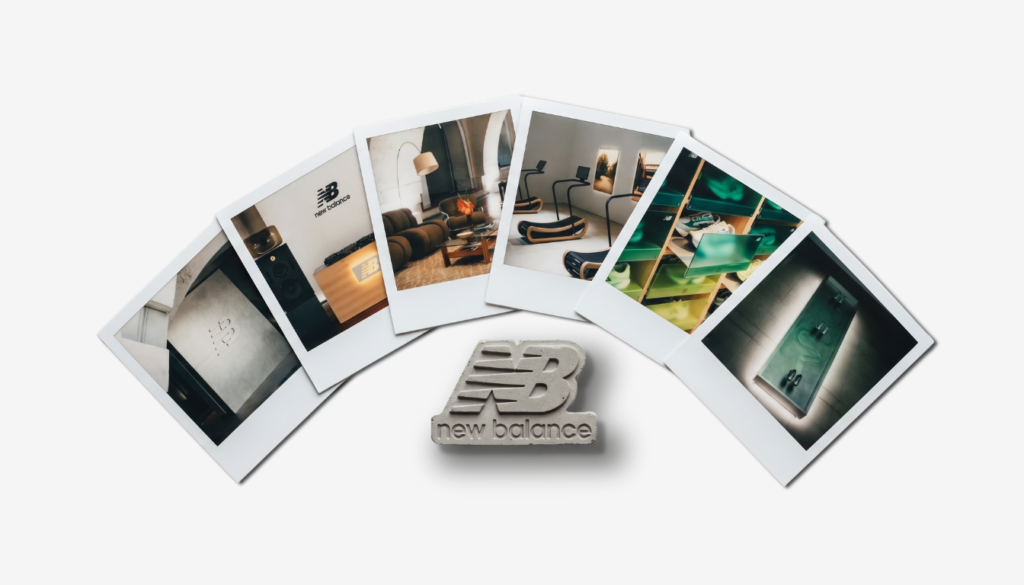
At a time when brands continue to compete for attention through increasingly amplified campaigns, New Balance has chosen a quieter, more deliberate approach, opening the doors to a space that feels less like a marketing activation and more like an extension of the culture it seeks to inhabit. Set within the historic Somerset House, the Run House unfolds not as a retail environment nor as a conventional pop-up, but as a carefully orchestrated setting where runners are invited to slow down, gather, and, perhaps most importantly, recognize themselves within the brand’s narrative.
What distinguishes the initiative is not simply its aesthetic appeal or experiential layers, but the way it subtly repositions the brand, shifting it from a voice that speaks to consumers to a host that creates the conditions for interaction, reflection, and participation. In doing so, New Balance appears less concerned with showcasing products in isolation and more intent on embedding itself within the lived experience of running, allowing the meaning of the activity to carry the brand forward rather than the other way around.
Turning a Moment Into a System
The decision to anchor the Run House around the London Marathon reveals a strategic sensitivity to timing that goes beyond simple opportunism, as the brand positions itself at the intersection of heightened emotion, collective participation, and global visibility. Yet rather than merely aligning with the event, New Balance extends its narrative, transforming the marathon into a broader ecosystem of experiences that unfold before, during, and after the race.
Within this space, the rituals of running are not only preserved but elevated, as product testing becomes an immersive encounter rather than a transactional moment, recovery transforms into a shared pause that invites reflection, and personal achievements are rendered tangible through gestures such as medal engraving, which convert fleeting accomplishments into lasting symbols. Alongside these elements, portraits and documentary-style storytelling lend visibility to individuals who might otherwise remain anonymous, weaving together a collective narrative that reinforces the idea that every runner, regardless of level, contributes to the culture.
In this sense, the Run House does not function as a campaign bound to a calendar date, but rather as a system that amplifies the significance of that date, extending its resonance well beyond the finish line.
The Rise of Participation as Media
As brands increasingly confront the diminishing returns of traditional visibility strategies, the Run House offers a compelling alternative by reframing participation itself as media, where engaging with the space becomes inseparable from documenting it. Every element, from the spatial design to the experiential touchpoints, appears calibrated to encourage organic sharing, not through overt prompts but through the creation of moments that feel inherently worth capturing.
This dynamic reflects a deeper understanding of contemporary behavior, in which individuals are more inclined to share experiences that resonate with their sense of identity, rather than those that simply signal consumption. By constructing an environment that mirrors runners’ aspirations, routines, and emotional landscape, New Balance effectively invites participants to become co-authors of the brand’s narrative, generating a form of visibility that is both more authentic and more durable than traditional advertising.
The result is not a campaign that produces content in the conventional sense, but one that cultivates the conditions for content to emerge naturally, carrying with it a level of credibility that cannot easily be replicated through paid channels.
From Performance to Belonging
Underlying the Run House is a broader strategic evolution as New Balance continues to expand its positioning beyond the confines of performance sportswear into a space where culture and athletics intersect, enabling the brand to engage consumers on a more holistic level. This shift is particularly evident in the inclusive nature of the experience, which deliberately dissolves the boundaries between elite athletes and first-time runners, creating an environment where participation itself becomes the defining criterion for belonging.
Such an approach not only broadens the brand’s appeal but also aligns with a wider cultural movement in which identity is increasingly shaped by shared experiences rather than hierarchical distinctions. By embracing this perspective, New Balance moves away from the traditional emphasis on performance metrics and instead foregrounds the emotional and social dimensions of running, positioning itself as a facilitator of connection rather than merely a provider of equipment.
In doing so, the brand articulates a message that remains understated yet powerful, suggesting that the value of running lies not solely in speed or endurance, but in the sense of community it fosters.
Designing for Scarcity, Not Scale
The temporary nature of the Run House, far from limiting its impact, heightens it, as the finite duration of the experience introduces a sense of immediacy that encourages participation while simultaneously enhancing its perceived value. In an era when digital content is perpetually accessible, the notion of a space that must be experienced within a specific timeframe resonates particularly, reinforcing the idea that certain moments cannot be deferred or replicated.
This strategic use of scarcity does not constrain the campaign’s reach but rather amplifies it, as the physical limitations of the space are offset by the expansive circulation of the stories and images it generates. Each shared experience extends the activation’s lifespan, keeping it alive in digital ecosystems long after the physical installation has been dismantled.
In this way, New Balance demonstrates an understanding that scale is no longer defined solely by physical presence, but by the capacity of an experience to travel across networks and remain relevant within ongoing cultural conversations.
A Blueprint for What Comes Next
The Run House ultimately points toward a broader transformation in the logic of brand-building, where the emphasis shifts from capturing attention to cultivating environments that invite engagement, participation, and, ultimately, identification. Rather than relying on increasingly saturated channels to deliver messages, New Balance creates a space where the brand is encountered through lived experience, allowing meaning to emerge organically through interaction.
This approach suggests a future in which the most effective marketing strategies operate not at the level of communication but at the level of context, embedding themselves within the rhythms and rituals of everyday life. By aligning utility, identity, and storytelling within a single, cohesive environment, the Run House offers a glimpse into this evolving paradigm, illustrating how brands can move beyond visibility to achieve something more enduring.
And within the walls of Somerset House, where runners gather not as spectators but as participants, that shift feels not only plausible but already underway.