
For much of the past decade, the direction of retail appeared firmly set, guided by the rapid ascent of platforms such as Ssense, Farfetch, and Net-a-Porter, which collectively transformed shopping into a seamless, borderless experience defined by speed, scale, and constant availability. In response, brands across categories invested heavily in building their own digital storefronts, convinced that reach and efficiency would not only drive growth but determine survival in an increasingly competitive landscape.
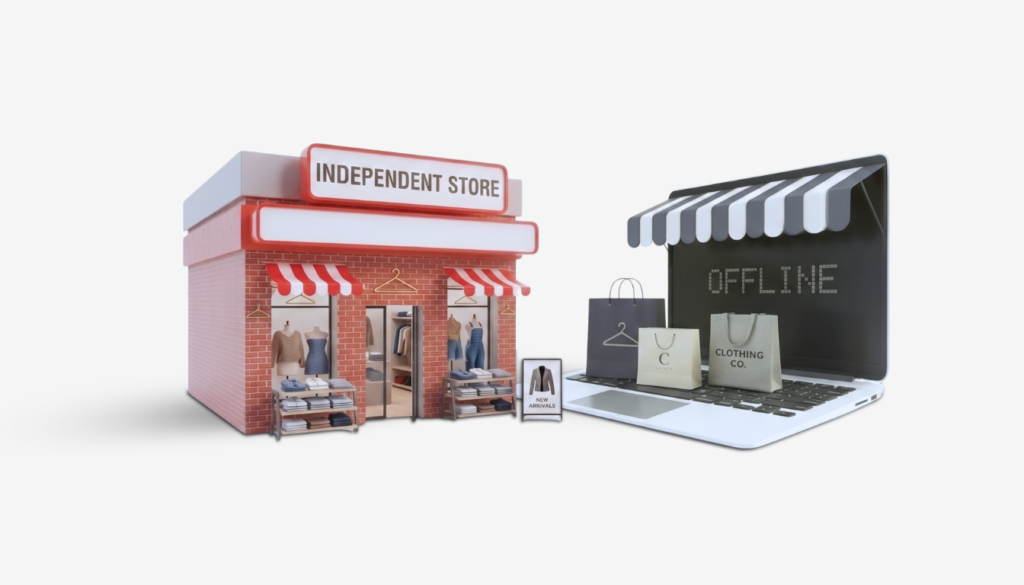
Yet, as e-commerce matured and became the default infrastructure of retail, its very strengths began to reveal their limitations, gradually flattening the experience it once promised to expand, as discovery turned into an endless scroll, curation into algorithmic suggestion, and differentiation into a narrowing spectrum defined largely by price, delivery speed, and promotional mechanics. What once felt expansive began to feel indistinguishable, prompting a subtle but meaningful shift among a new wave of independent retailers who, rather than doubling down on digital, are choosing to step away from it altogether.
From Transaction to Destination
In neighborhoods once marked by declining foot traffic and shuttered storefronts, a different kind of retail presence is beginning to take shape, one that resists the logic of efficiency in favor of immersion, where stores are no longer designed to facilitate quick transactions but to encourage slower, more intentional forms of engagement. These spaces operate less as points of sale and more as environments of experience, where atmosphere, human interaction, and contextual storytelling become central to the shopping experience.
This evolution reflects a broader recalibration in consumer behavior, as years of convenience-driven consumption give way to a renewed appreciation for experiences that feel deliberate and grounded, suggesting that the value of retail may lie not only in what is sold, but in how it is encountered. In this context, the store itself becomes a form of product, offering something that cannot be replicated through logistics or interface design, but must instead be physically inhabited and personally interpreted.
The Power of Less
If the digital era of retail was defined by abundance, then this emerging model is distinguished by its embrace of limitation, as independent retailers increasingly favor tightly edited assortments over expansive inventories, offering selections that communicate a clear, deliberate point of view. In doing so, they respond to a growing sense of fatigue among consumers who, overwhelmed by the excess of online choice, are beginning to seek clarity over quantity and coherence over scale.
Within these environments, curation takes on renewed significance, functioning not merely as a merchandising strategy but as a form of authorship, in which each product carries meaning within a broader narrative constructed by the retailer. Trust, in this sense, is no longer derived from aggregated reviews or algorithmic rankings, but from the perceived expertise and sensibility embedded in the space itself, reinforcing the idea that value is increasingly tied to interpretation rather than access.
Community as Currency
While the absence of e-commerce might suggest a limitation in reach, many of these retailers are demonstrating that growth can emerge from a different, more relational dynamic, one rooted in proximity, participation, and belonging. By embedding themselves in their neighborhoods—hosting events, fostering ongoing relationships, and creating spaces that invite repeated interaction—they transform the store into a social anchor as much as a commercial one.
In this model, visibility is not purchased through digital channels but generated through presence, as customers become participants in a shared environment rather than passive recipients of marketing. The store, in turn, functions as its own form of media, distributing influence not through scale, but through depth, and redefining the mechanics of expansion in a way that privileges connection over exposure.
A Strategic Refusal
The decision to forgo e-commerce, while seemingly counterintuitive in a digital-first economy, reflects a calculated response to the structural realities of modern retail, where the costs associated with online operations—from logistics and returns to platform dependencies and pricing pressures—can quickly erode both profitability and identity, particularly for smaller players operating without the advantages of scale.
By choosing to remain offline, these independent retailers retain greater control over how their brands are experienced, avoiding the homogenizing effects of standardized digital interfaces and the competitive compression that accompanies global marketplaces. In doing so, they protect not only their margins but their distinctiveness, positioning themselves outside of a system that often rewards sameness over singularity.
A Rebalanced Landscape
Rather than signaling a retreat from digital commerce, this movement points to a broader rebalancing within the retail ecosystem, as the rapid expansion of e-commerce stabilizes and physical retail reasserts its relevance in a more diversified landscape. While online channels remain integral, they no longer operate as the sole or even primary driver of engagement, creating space for alternative models to emerge.
For independent retailers, this shift represents an opportunity to occupy a less saturated domain, where the physical environment offers a different kind of visibility—one that is inherently limited in scale but amplified in impact, precisely because it resists replication. In a market defined by digital abundance, the scarcity of experience becomes an advantage.
The Return of Meaning in Retail
At its core, the resurgence of physical retail among independent stores reflects a deeper transformation in consumer priorities, as the emphasis shifts from convenience to a search for meaning, identity, and connection. While e-commerce optimized the mechanics of access, it did little to address the experiential and emotional dimensions of consumption, leaving a space that these retailers are now actively filling.
In this emerging paradigm, success is less about reaching the widest possible audience and more about creating environments that resonate deeply with those who enter them, suggesting that the future of retail may be defined not by who can distribute the fastest, but by who can create something that feels worth the journey.