
A Sellout, Again
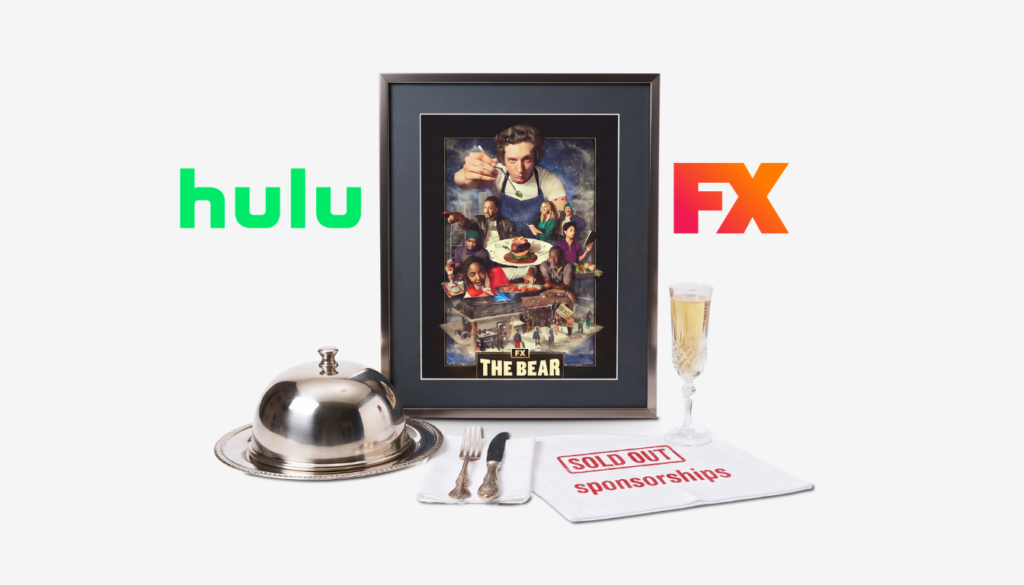
The final season of The Bear arrived on Hulu and Disney+ on June 25, and once more it sold out its sponsorships. Since the show broke out in 2022, it has sold out every year and grown its ad revenue season after season, according to John Campbell, a senior vice president in Disney Advertising’s entertainment and streaming solutions group. The pattern held for the fifth and last season, and Disney’s read is that the program’s commercial influence reaches well beyond its own episodes.
The trajectory shows up in the numbers from the prior year. Season four drew a record 30 sponsors across a wide range of categories, with revenue growth of more than 20% over the previous season and more than double the total from season two. That kind of compounding is rare, and it turned The Bear from a critical darling into one of Disney’s most dependable advertising assets.
The End of the Wait-and-See Approach
The more consequential shift is in how advertisers behave around Disney’s other shows. Campbell’s account is that brands used to take a wait-and-see stance toward freshman and first-year series, holding budget until a program proved itself. The Bear’s run helped change that reflex. Marketers who saw the show reward early commitment became more willing to back Disney’s newer titles before the ratings were in.
That is the halo effect at work, and it is worth understanding as a mechanism rather than a happy accident. A flagship success does two things for a media owner: it builds trust in the seller’s ability to pick and package hits, and it lowers the perceived risk of betting on the next unproven title. Once a brand has been rewarded for getting into The Bear early, the argument to get into the next promising show early becomes easier to make. Disney’s slate benefits from a reputation that a single program helped establish.
Custom Content as the Draw
Part of what makes the show’s sponsorships sticky is the format. Much of the advertiser interest has centered on custom content produced with Disney’s in-house creative studio rather than standard spots alone. In the prior season, brands including American Express, Resy, Audi, State Farm, and Vital Farms built tailored integrations, alongside a long roster of additional sponsors spanning food, finance, and consumer categories.
Custom content changes the economics for both sides. For the advertiser, it offers association with a culturally resonant show and creative that fits the world of the program instead of interrupting it. For Disney, it commands higher value than commodity inventory and deepens the relationship with the brand, making renewal more likely. The Bear became a showcase for that model, demonstrating that a beloved series can anchor bespoke work that both parties want to repeat.
What Marketers Can Take From It
For brand and media buyers, the lesson is about the value of conviction and timing. The advertisers who committed early to The Bear captured association with a show before its price and scarcity climbed, and they built a track record with a partner that paid off across subsequent seasons. Waiting for certainty is expensive when the certainty arrives priced in.
The broader takeaway concerns how premium content functions inside a streaming portfolio. A single title with cultural weight can lift the commercial prospects of an entire slate, reshaping buyer psychology in ways that outlast the show itself. As The Bear closes, Disney keeps the template it helped create: a proof point that early belief in the right program can be rewarded, and a reason for advertisers to approach the next launch with less hesitation than they once did.