
The 2026 World Cup ended on July 19 with Spain lifting the trophy, and the marketing scoreboard is now in. TV measurement company EDO calculated the effectiveness of every ad that ran across English and Spanish broadcasts during the tournament, from June 11 to July 19, and shared the results with ADWEEK. The ranking uses EDO’s TV Outcomes Score, which measures how much more consumer engagement an ad drove compared with the average spot during the World Cup, based on the immediate behaviors most predictive of future sales.
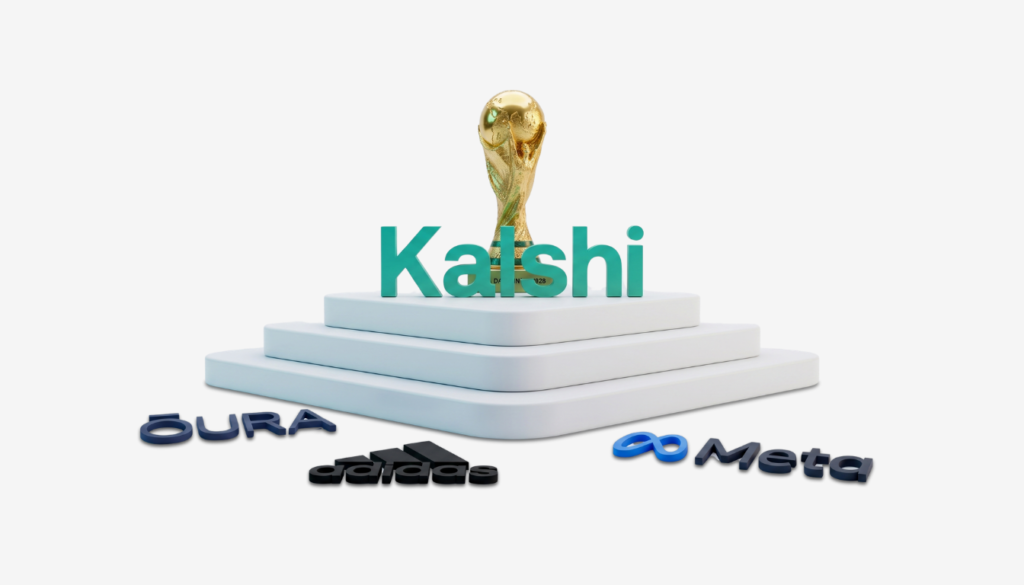
The most effective ad of the entire tournament had nothing to do with football. Prediction market Kalshi took the top spot with a 30-second spot featuring Timothée Chalamet at the dentist, scoring 79,599 on EDO’s index. To put that in context, a score of 1,000 means an ad drove ten times the engagement of the average World Cup spot. Kalshi’s number is in a category of its own.
The prediction markets punched above their weight
Kalshi’s win is not a fluke, and it points to the sharpest strategic story of the tournament. Prediction markets, which let people wager on the outcome of events, treated the World Cup as a launch platform and bought attention aggressively. Kalshi placed multiple spots in the ranking, including ones featuring José Mourinho and Giannis Antetokounmpo. Polymarket, its rival, landed several entries in the top 20, including a 75-second spot with Future, Rick Rubin, and Peso Pluma.
These brands are young, cash-rich, and competing for the same first-time users, which pushes them toward bold creative and heavy frequency. The World Cup gave them a captive audience of exactly the demographic they want. That a prediction market outscored every sponsor and every sportswear giant should unsettle the incumbents who paid a premium for official status.
Adidas won the soccer story
Among brands whose business is actually tied to football, Adidas performed best. Its Backyard Legends campaign, anchored by Timothée Chalamet alongside Lamine Yamal, Jude Bellingham, and Trinity Rodman, placed third overall at 14,101 and secured several more entries throughout the ranking. The result rewards a campaign that Adidas built as a long marketing runway rather than a six-week burst, and it validates the company’s decision to attach the creative to real product drops and retail activations.
Chalamet appears at both the very top of the ranking with Kalshi and near the top with Adidas, a reminder that the right talent can carry effectiveness across unrelated categories. Casting is doing heavy lifting in these numbers.
Sponsors did not automatically win
One of the more uncomfortable findings for FIFA’s official partners is how many non-sponsors outperformed them. Oura Ring, a consumer electronics brand with no official tie to the tournament, finished second overall at 26,661. Meta’s Kylie Jenner glasses spot placed fifth. Verizon, AT&T, and YouTube TV all cracked the top ten. Several of the highest-scoring ads came from brands that simply bought attention during the most-watched broadcast of the year without paying FIFA’s sponsorship fee.
Official sponsors did register. The Home Depot’s Build it Like Beckham spots, McDonald’s World Cup Meal campaign, and Airbnb’s sponsor spots all placed respectably. But sponsorship status guaranteed nothing. The data suggests that creative quality and media weight mattered more than the official badge, a finding that should inform how brands weigh the cost of sponsorship against the cost of simply showing up with strong work.
The celebrity crowding problem
The ranking also exposes a structural risk that ADWEEK has flagged separately. Lionel Messi appeared in close to a quarter of all tournament spots, and David Beckham fronted ads for more than ten sponsors. When the same faces appear across dozens of brands, viewers struggle to attribute an ad to the correct advertiser. Messi shows up in spots for Adidas, Michelob Ultra, Lowe’s, Duracell, and more across the ranking. Each of those brands paid for star power that its competitors were also renting.
The lesson embedded in the numbers is that shared casting dilutes recognition. A high engagement score means little if viewers cannot remember which brand ran the ad. The brands that scored well with distinctive creative, like Kalshi’s absurdist dentist premise, bought something their rivals could not copy.
What marketers should take from the scoreboard
The EDO ranking is a rare look at outcomes rather than opinions, and three conclusions stand out. First, category disruptors with capital to spend can win the biggest cultural stage against established players, as the prediction markets proved. Second, official sponsorship is a tool, not a guarantee, and brands should measure its value against the alternative of buying strong media without the badge. Third, distinctiveness beats familiarity, because a recognizable face shared across a dozen brands is a liability, not an asset.
For marketers planning around the next tentpole, the data offers a clear brief. Spend on creative that no competitor can replicate, cast talent your category rivals are not already using, and remember that the audience rewards the ad it remembers, not the one it merely watched.