
A Campaign That Hides the Tennis
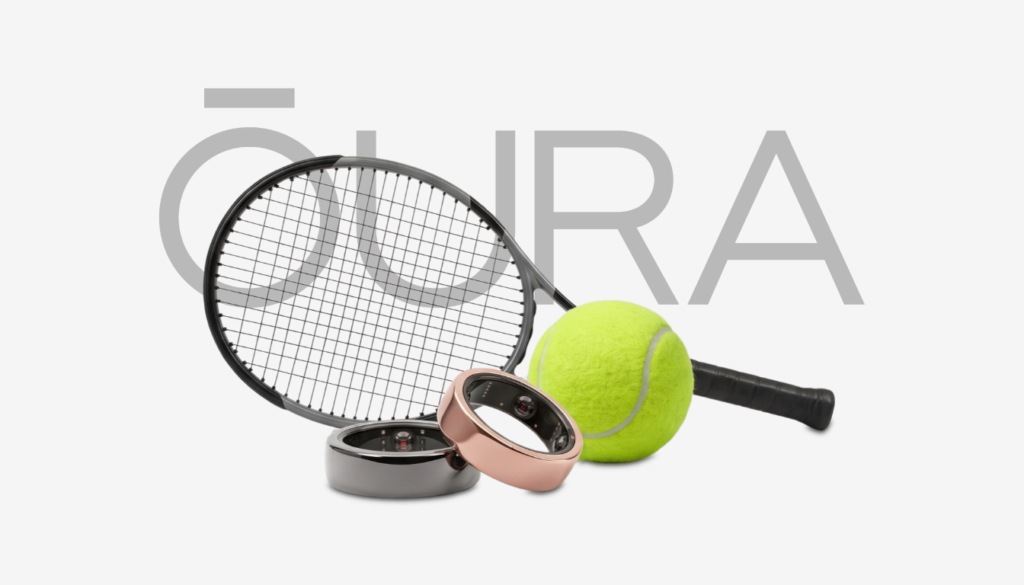
Oura built its biggest sports moment to date around two of tennis’s most watched Americans, then refused to show either of them playing. In the launch films, Taylor Fritz opens an attaché case filled with tennis balls inside a corporate office, and Coco Gauff opens a school locker marked with a “See You in Queens” sticker as balls spill onto the floor. The brand signed both to long-term partnerships and timed the work to the US Open, yet the racket stays out of frame. Oura says it is stepping away from “the traditional playbook that features triumph and highlight reels” to spotlight “the invisible work behind it: sleep, recovery, and readiness.”
Selling Rest Instead of Winning
The choice is a strategy, not a stylistic quirk. The wearable market has moved past step counts and toward recovery, and Oura wants the ring understood as the instrument of rest rather than a scoreboard for effort. That framing widens the audience well beyond professional athletes to anyone who worries about sleep and burnout, a far larger pool of buyers than the performance-obsessed core. Recovery culture, from sleep tourism to cold plunges, has turned rest into a status pursuit, and Oura is positioning its ring as the membership card. The athletes make the message credible. Gauff, who exited last year’s Open in the round of 16, told Vogue she now takes a calmer approach and called the partnership a natural fit. When the endorser embodies the product’s promise, the endorsement stops feeling transactional.
The Money Behind the Moment
Oura is spending marquee-sponsorship money because the stakes have grown. The company was valued at roughly $11 billion after a $900 million funding round, more than double the $5 billion it carried in 2024, and it has filed confidentially to go public while projecting close to $2 billion in revenue this year against about $500 million two years ago. Its closest rival, Whoop, raised $575 million at a $10.1 billion valuation. The smart-ring category is still small, worth about $417 million in 2025, but forecasters expect it to approach $3.8 billion by the middle of the next decade. A brand racing toward a public listing needs mainstream recognition, and a fortnight at the center of American tennis is an efficient way to buy it.
A Media Plan Built for More Than the Grounds
Underneath the creative sits a five-year agreement making Oura the Open’s official wearable fitness device, complete with on-court signage and the first tournament that lets players wear such devices in match play. The paid push reaches well past the stadium. Oura is running LinkNYC kiosks across the city, a full-page New York Times print ad, and a digital takeover with The Athletic, with Omnicom’s MediaHub handling the buy. On the grounds, an activation developed with Matte Projects runs from Fan Week on August 23 through the finals on September 13, offering a thermal-imaging heat check, a cooling station, and fan lockers stocked with Oura Ring 5 giveaways. The plan treats the Open as a broadcast platform rather than a booth.
Claiming a Territory Before Rivals Do
The larger play is about ownership. Recovery is becoming a marketing territory the way hydration and protein once did, and Oura is trying to plant its flag before Apple, Garmin or Whoop define the space. Whoop still leans on the language of maximal performance, which leaves the softer ground of rest and readiness open. Selling recovery at the sport’s loudest American stage reframes performance around what happens off the court, a story that can outlast any single tournament. The risk is that an anti-highlight campaign reads as too understated for a crowd conditioned to celebrate winners, and consumer fatigue with constant self-tracking is real. Still, the lesson for marketers is clear. In a category crowded with sensors and specs, the more durable move is to own a feeling, and Oura has decided readiness is the feeling worth owning.