
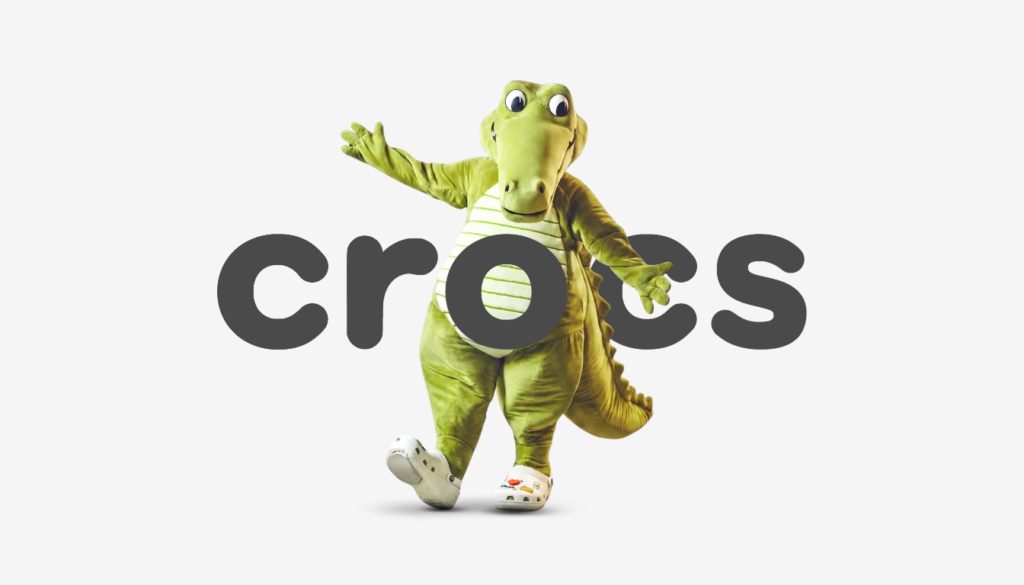
Crocs has spent years turning an unfashionable clog into one of retail’s most reliable meme machines. On August 13 it tried to bottle that energy in a single character. The company introduced Niles, its first official mascot, with a live hatching on its social channels, the payoff to weeks of teasing that included a three-foot egg planted inside TikTok Shop livestreams and logos hidden across brand assets.
Crocs frames Niles as having been there all along, latent in the brand’s logo and now given a six-foot, huggable body. He stars in an original micro-series that follows him through office life alongside employees at Crocs headquarters, and the company describes him as a living character meant to grow, form relationships and evolve through social content, fan events and in-person experiences rather than any one product launch.
From Logo to Living Character
The rollout was built for a feed. Rather than announce a mascot, Crocs staged a hunt and reveal: the Easter eggs, a 24-hour countdown, then the hatching, a sequence closer to an alternate-reality game than a product drop. Giving Niles his own micro-series, set at headquarters, signals the ambition. This is not a costume for store openings. It is an attempt to launch a character with a personality and a recurring format, the raw material of a show, and to make that character the brand’s most repeatable piece of content.
The Duolingo Playbook, in Rubber
The template is unmistakable. Duolingo turned its green owl, Duo, into something bigger than a logo, a personified version of the brand that now anchors an account with tens of millions of TikTok followers built on close to zero paid media. Duolingo has said it wants Duo as famous as Pikachu and has even produced green, owl-inspired Crocs. Crocs is now running the same idea in-house. A mascot, done well, is a content engine that never runs out of premise and an emotional moat a rival cannot simply buy. For a brand that already trades in collaborations and internet humor, Niles formalizes the always-on character that memes alone could not guarantee, and he arrives just as TikTok Shop becomes a serious commerce channel Crocs wants a native reason to keep posting into.
Why Crocs Needs a Story Beyond the Clog
There is a business reason to build equity that is not tied to a single shoe. Crocs posted 4.04 billion dollars in revenue for 2025, down 1.5 percent from the prior year, with the core Crocs brand up 1.5 percent. The brand hit a record by crossing 1 billion dollars in a single quarter in the second quarter of 2026, up 4 percent, yet the company’s own 2026 outlook is only flat to slightly higher. Its HEYDUDE acquisition has been a drag, with revenue down 13.3 percent in 2025 and a 738 million dollar impairment against the brand. Set against slowing growth and a difficult second label, a mascot is cheap, renewable brand equity. It does not depend on a hit collaboration or a friendly economy, and it gives the marketing team a reason to show up daily that is not a discount.
The Risk of Manufactured Whimsy
The danger is that a corporate mascot reads as manufactured. Duo works because the character is consistent and a little unhinged, with a voice audiences trust to be strange. Niles will have to earn his place rather than assume it, and a silent character launched with this much apparatus invites the question of whether the personality is real or assigned. Sustaining a living character is a long commitment; the format only compounds if the brand keeps feeding it past the launch spike. The upside, if Crocs holds the line, is intellectual property it owns outright, free of the licensing fees and expiration dates that come with celebrity and collaboration.
What Marketers Should Take From It
Niles is a clear read on where brand building is heading. The move is to own a character rather than rent a campaign, to tease it like a story rather than announce it like a promotion, and to wire it to commerce without turning it into a salesman. The brands most exposed to content fatigue, the ones expected to post daily across platforms, have the most to gain from a persistent character that supplies its own narrative. The catch is the one every studio knows. A character is only as valuable as the writing behind it, and the test for Niles will not be his hatching. It will be whether anyone still wants to watch him a year from now.