
A Sequel to a Sugar Hit
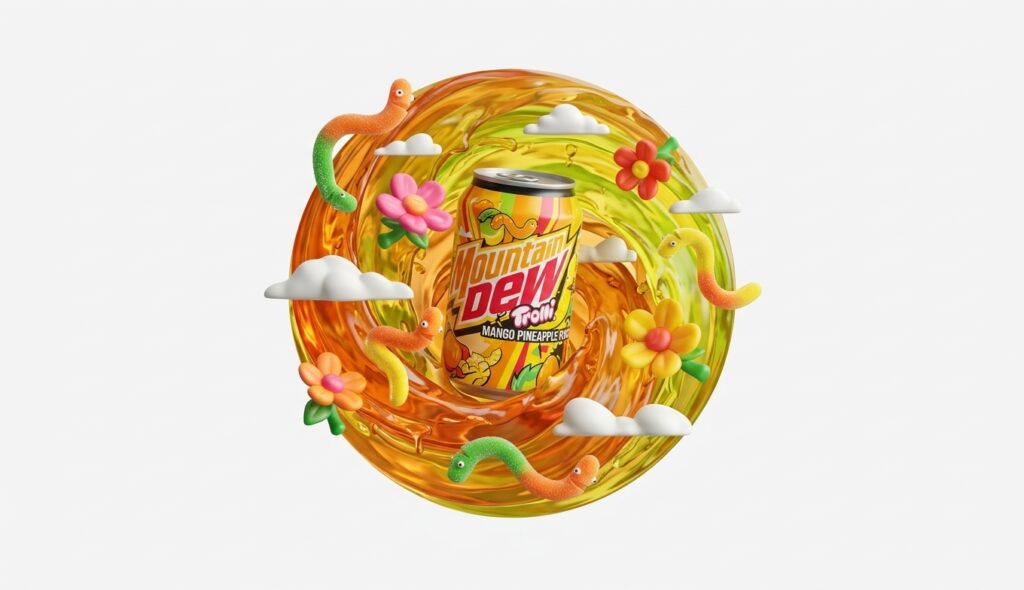
Mountain Dew and Trolli have returned with Mango Pineapple Punch, a limited-edition soda that blends mango and pineapple with a hint of strawberry, released with collaboration kits sold exclusively on Walmart.com beginning August 24. It follows the brands’ 2025 Cherry Lemon collaboration, a zero-sugar soda tied to Trolli’s sour gummies that became one of the fastest-selling products in the Mountain Dew lineup. This is a sequel, not a one-off, and PepsiCo and Ferrara, Trolli’s owner, are treating a proven pairing the way a studio treats a franchise, extending a hit rather than gambling on something untested.
Borrowing Candy Equity
The logic of the tie-up is an exchange of audiences. Trolli brings a devoted sour-candy following and an appetite for loud, playful flavors, while Mountain Dew brings mass distribution and its own Gen Z credibility. Each lends the other something it would otherwise have to build, and the combination manufactures talkability at a fraction of the cost of a standalone launch. PepsiCo frames the drink around a broader appetite for unexpected flavor combinations, positioning novelty itself as the product. The soda is less a beverage than a conversation starter engineered to be photographed, tasted on camera and argued about online.
The Drop Mechanics
The release borrows its playbook from fashion rather than the grocery aisle. A limited-edition run paired with a single-retailer exclusive creates scarcity and hands Walmart a reason to promote it, while the collectible kit format invites the same completist urgency that drives sneaker and streetwear culture. This is the consumer-goods version of a drop, built on hype, exclusivity and the fear of missing a flavor that will not be restocked. Because the first collaboration proved the demand, the sequel carries less risk and can be executed faster, turning a flavor into an event on a predictable schedule.
Why Flavor Collabs Work and Wear Out
The appeal of cross-category flavor collaborations is that they are cheap to hype and quick to sell through, but their weakness is durability. Novelty fades fast, and a portfolio stuffed with limited editions can blur what a brand actually stands for. The mango-pineapple note running through this launch also surfaced at McDonald’s and Panera in the same stretch of August, a reminder of how quickly a flavor trend now travels between unrelated brands, and how fleeting any single one can be. A collaboration that feels distinctive today can look generic once every competitor has chased the same taste.
What Marketers Should Take
The reusable lesson is that co-branding, scarcity and a retail exclusive form a dependable buzz machine for consumer goods, capable of generating outsized attention on a modest budget. The equity only compounds, though, when the collaboration reinforces the brand’s identity rather than merely chasing a trend, and Mango Pineapple Punch works because bold, unexpected flavor is already central to what Mountain Dew sells. The sequel approach lowers risk by repeating a proven idea, yet it invites diminishing returns if the drops keep coming. The discipline is knowing when a franchise still delights and when it has become a habit the audience has outgrown.