

A Campaign Built as a Story
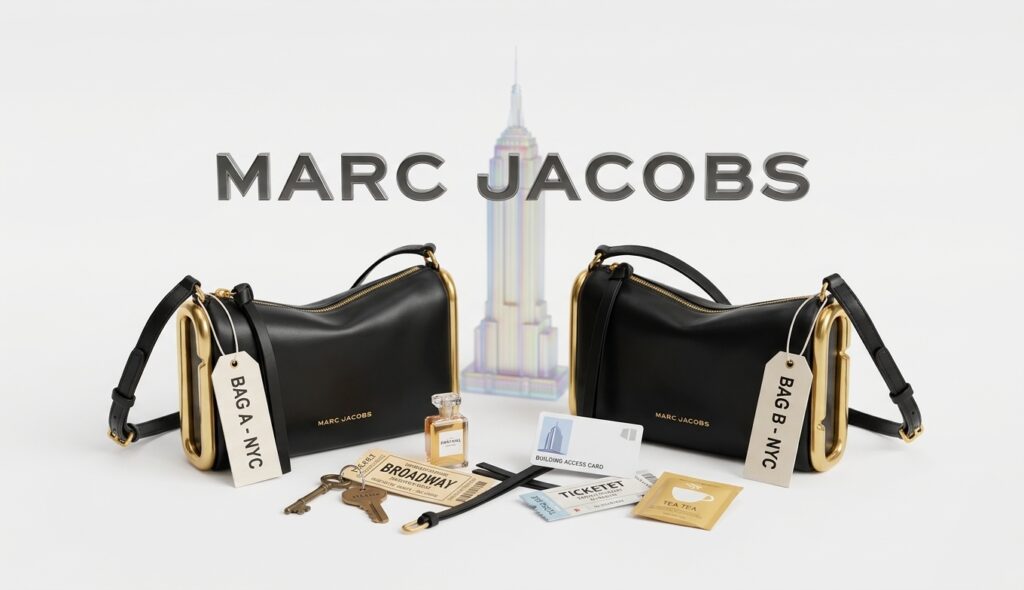
Marc Jacobs has extended its Question Marc series with a second chapter called The Swap, a scripted micro-drama starring Rowan Blanchard and Jemima Kirke. The premise is small and sly. At the end of the fashion house’s runway show, the two women accidentally exchange their Scene Bags, then travel intersecting paths through New York City, each examining the contents of the other’s bag and drawing conclusions about a stranger. Narrated by the playwright and actor Jeremy O. Harris, the first installment opens at Bookmarc, the bookstore chain Marc Jacobs founded, grounding the fiction in the brand’s own world rather than a studio set.
The Bag as a Narrative Device
The striking choice is how little the product performs like a product. The Scene Bag is the engine of the plot, not the subject of a glossy still, and the story it carries is about perception, how the objects a person owns shape the way others read them. That inverts the logic of the traditional fashion campaign, which exists to render an item desirable in a single frame. Here the item is a clue, and the payoff is narrative rather than aspiration. The audience is invited to watch and interpret, which asks for a kind of attention a billboard never could.
Why Fashion Is Turning to Serialized Fiction
The move reflects a broader shift from campaign imagery toward recurring narrative property. A named, returning series like Question Marc builds anticipation between installments and gives social feeds episodic content that does not announce itself as advertising. Casting accomplished actresses instead of models, and enlisting a theater-world narrator, signals craft and courts the culture press, and the work drew coverage from Women’s Wear Daily to Good Morning America. Marc Jacobs has been running this playbook for a while, and it sits alongside a wider luxury turn toward entertainment-grade film, where houses compete to make work people choose to watch rather than skip.
The Craft and the Calculation
The format is designed to reward attention. Viewers assemble a portrait of each character from the artifacts inside a handbag, a device that is inherently shareable and built for rewatching as people trade theories about what the objects mean. Setting the action at Bookmarc and across recognizable New York keeps the story tethered to the brand’s identity. The risk is the familiar one for clever advertising. A mystery about perception can be so absorbing that the object at its center recedes, and a campaign meant to move a specific bag may leave viewers remembering the plot rather than the product.
What Marketers Can Borrow
The lesson is that the strongest brand content now behaves like a show, named, serialized, cast and narrated, so it earns attention instead of paying to interrupt it. Turning a handbag into recurring intellectual property gives a fashion house a reason for audiences to come back, and a library of stories to extend. The discipline is keeping the product legible enough to desire even as the narrative takes the spotlight. Marc Jacobs is counting on fashion audiences to follow a good story all the way back to the shelf, and on the Scene Bag being memorable enough to survive its own mystery.